TravelCommons

Podcast: TravelCommons

  • Podcast #192 — New Year Travel Planning Tips; Gin Conquers the World

    Podcast #192 — New Year Travel Planning Tips; Gin Conquers the World

    Cat with paw on the rim of a gin tonic glass
    Can’t get to the artisanal garnish

    With COVID travel restrictions gone, I expect people to revert back to their old ways where January is the biggest travel planning month. I wade into the debate between booking direct with travel providers vs. booking with agents and 3rd-party sites. I see how well my travel tips did during the Southwest cancellation chaos, and then pull out a little more of my conversation with Jeff Cioletti, author of the new book Imbibing for Introverts; this time about how gin is going global with a local twist. All this and more – click here to download the podcast file, go up to the Subscribe section in the top menu bar to subscribe on your favorite site, or listen right here by clicking on the arrow on the player.

    Here is the transcript of TravelCommons podcast #192:

    Since The Last Episode

    • Intro music — Warmth by Makkina
    • Coming to you from the TravelCommons studios in Nashville, TN. Haven’t done any travel since the last episode. Instead, I’m starting the year off, as many others do, by doing travel planning, trying to lay out a 2023 travel calendar so we don’t slouch past the days and then, in say August, look back and say “Where’d the year go?”  Back in episode #159, I talked about how travel planning would traditionally kick in the week after Christmas — although I’ll say that given episode #159 was posted in January 2020, 2 months before the first wave of COVID lockdowns, my timing on that probably wasn’t the greatest. A year later, January 2021, in episode #171, I tried it again, ticking through 5 travel planning tips for COVID times. They were all about agility — paying attention to cancellation rules, monitoring last-minutes changes in lockdowns and health requirements…. 
    • But now two years later, with COVID cases down and travel volumes pretty much back up to 2019 levels, I expect folks will revert back to their old travel planning patterns. Back in my travel tech CIO days, right before Christmas, we’d always lock down our systems and put on extra capacity (which, let me tell you kids, back in the pre-cloud days, meant rolling actual servers, real live physical equipment uphill, through the snow, onto the data center’s raised floor) so we could handle the spikes in search volume. And while we’d see some minor spikes from the systems that travel agents used, the biggest volumes came from on-line sites like Expedia and Booking.com, sites more popular with leisure travelers than business travelers.
    • But now in 2023, I’m guessing that the Chinese are chief among those rushing back to their pre-COVID travel planning after the government quit their zero COVID policies. Indeed, on December 26, within a half an hour of the announcement that China’s borders were fully reopening, searches for international travel on China’s biggest on-line site, Trip.com, surged back to pre-COVID levels. The top search destinations were Southeast Asian countries, the US, and the UK. Now remember, before the lockdowns, the Chinese were by far the largest source of international tourism spending — $255B, 70% more than second-place US, which was at $150B. So if you, like me, thought popular vacation destinations were crowded last year, just wait for this summer — for what I’m guessing will be a second wave, maybe a Chinese tsunami of “revenge travel.”
    • Bridge Music — Earth Soda by septahelix (c) copyright 2011 Licensed under a Creative Commons Attribution Noncommercial Share-Alike (3.0) license. http://dig.ccmixter.org/files/septahelix/34050

    Following Up

    • Back in August, episode #188 was all about tips for avoiding travel chaos. I recorded it at the tail end of a summer of travel woes, after a July 4th holiday weekend that was seen as a complete train wreck with 1,100 canceled flights and 4,000 delays — to which, as we all know, Southwest said “Hold my beer” and canceled almost 16,000 flights between Christmas and New Year’s — to which the FAA said “Wait, I wanna play too” and disrupted over 11,000 flights in one morning. And when the root cause for both was found to be old technology, all the gray-haired IT guys nodded to each other and repeated their mantra — “technical debt is a bitch.”  Southwest has estimated a profit hit of as much as $825 million from their debacle. Just sayin’– even just half that would’ve funded a whole lot of fixes to their old scheduling system.
    • But looking back at those summer tips, pack so you can carry on and if you can’t, then spread everyone’s clothes across all your checked bags were pretty much spot-on. As was the discussion in episode #190 about how adding Apple AirTags to my travel tech stack saved me time and agita when United lost my luggage. With all the stories about piles of stranded luggage from the bomb cyclone and Southwest cancellations, AirTags have proven to be a critical “must-have” if you have to check a bag, and have an iPhone. For Android users, you’ll have to wait a bit longer; people who spelunk through new Android code think Google is working on its own AirTag-like tracker
    • But I think I missed a couple of things. First, I should’ve pointed back to and recapped my conversation in episode #164 with Brett Holzhauer, a travel credit card analyst now at CNBC, about the trip cancellation, trip interruption, and baggage insurance that many people don’t realize they get by charging their trip on a travel credit card. Maybe the tip there is, before you book your trip, pull out the credit card benefit summaries so you know which card will give you the best protection.
    • The second tip I’d add is — take pictures of your checked luggage, outside and the contents inside. The pictures of the bags will help you answer the “describe what your bag looks like” question on the airline’s lost baggage form. The pictures of the inside will help with that baggage insurance claim. But just the fact that we’ve got to think about all this just to have someone take us and our stuff from Point A to Point B… Jesus, what a broken system.
    • In what has become a going on 2-year thread about international travel planning, I’ve talked about COVID travel rules, testing, Global Entry, passport applications… And so one of the trips we’ve been planning is to hit the tulip festival in Holland — the country, the Netherlands, not the town in Michigan, which can screw you up if you don’t look closely at your Google search results. The tulip festival in the Netherlands is in April while the one in western Michigan is in May.  And that initial lack of Google input box precision, using Holland rather than the Netherlands, which surfaced the May date, sent me down a whole ‘nother search path because, deep in some random brain fold, I remembered a May start date for ETIAS — the European Travel Information and Authorisation System which is the EU’s version of the US’s ESTA, the Electronic System for Travel Authorization. Now this whole E-acronym soup is pretty much just electronically plugging the travel information gap for folks who don’t need a visa to enter a country. The US started it first, another recommendation from the 9/11 Commission, but unlike Real ID, ESTA actually got implemented — in 2009. It started off free but is now $21 per person for two years, with most of that going to fund Brand USA, the US tourist promotion agency. The EU’s ETIAS is cheaper – €7 per person for three years. It got started later, in 2018, and its go-live date has been kicked down the road a few times now — from 2022 to May 2023 as that random neuron of mine recalled, but I guess I missed the latest push, which happened back in August, that delayed ETIAS another 6 months. So now go-live is November 2023 — still nothing like the 17-year-and-counting delay for Real ID. So, as it turns out after losing a couple of hours of my life in a click spiral, nothing to worry about ‘til next year.
    • And if you have any travel worries… or stories, questions, comments, tips, rants – the voice of the traveler, send ’em along to comments@travelcommons.com — you can send a Twitter message to mpeacock, post your thoughts on the TravelCommons’ Facebook page or the Instagram account at travelcommons — or you can post comments on the web site at TravelCommons.com.
    • Bridge Music — Generic Apologies by Speck (c) copyright 2022 Licensed under a Creative Commons Attribution Noncommercial (3.0) license. http://dig.ccmixter.org/files/speck/65664 Ft: jaspertine, Zenboy1955, Admiral Bob, Apoxode

    Travel Planning — Book Direct or through a Third-Party?

    • Chris Chufo, long-time friend of the podcast, pointed me to a Washington Post column by Christopher Elliot on the “great debate” (as he put it) between booking direct with an airline or hotel or car rental company vs. using a 3rd party, a travel agent or an on-line site like Booking.com or Airbnb. It’s an ongoing debate because there’s not a straight-forward answer, and it’s one that I personally straddle when booking travel. But when I think about it, and what the Post column didn’t really articulate, is that the decision point hinges on relationships and leverage.
    • When booking flights, trains, rental cars, I almost always book direct because if there’s a problem — a delay, a cancellation — I can work directly with the airline or rental company to figure out an alternative. When I booked through a 3rd party — most recently, back in 2019 when Amex was giving a 5x multiplier on Membership Rewards points for booking through them — and then had a flight cancellation in Charlottesville, VA, the carrier wouldn’t talk to me — “You need to call your agent.”  Which I did, while standing in front of the ticket counter at the airport, looking at the flight status display saying “Canceled” and telling the Amex agent the current situation because the flight status has been updated in their system yet. After which the agent said “Hold on, I need to call the airline because it’s so close to departure, I can’t do anything in the system” — basically making the same call I just got off of. Third parties really don’t have much leverage over carriers — airlines, trains, or even rental cars — and there’s no real value in putting them between me and the carrier when I’m trying to move fast to swerve a delay or cancellation. Especially a carrier where I’ve got status; that marker of a relationship often delivers more than an agent can.
    • Hotels can be a bit different. I’ll book directly with the big chains — Marriott, Hilton — again, places where I have status. My experience has been that the reservation agents are more flexible when I need to make a change, and it feels like (though I don’t have hard data on this) I get upgraded more often by the front desk. And if I have, say, a billing issue with a Marriott property, Corporate Marriott will look at my lifetime titanium status and give me the benefit of the doubt. However, with independent properties where I haven’t stayed before and this is a one-time transaction, and so don’t have any leverage from an on-going relationship or, say, the potential for future business, the situation is murkier. An Airbnb or an Expedia, who can see future revenue from me, might be more willing to help me out with a problem. But the property has a financial incentive for me to book directly with them — it saves them commission that could be as high as 40%.  So if I’m going someplace new, I usually start off searching on a 3rd-party site — Airbnb, Booking.com — to see what’s available. If I narrow down to an independent place and I’m going to stay there for more than a day or two, I’ll flip over to their web site — can I get a better price booking direct? I check out TripAdvisor — can I trust them? If both are “yes’s”, then I’ll book direct — because I still have one fall-back protector, my credit card company. 
    • Last year, our last night in Sicily, we booked a hotel room that was maybe a 5-minute walk from Catania airport because we had an early flight out the next morning. We found it and booked it on Booking.com — the path of least resistance. So on that last night, driving back with our friends from Taormina (before The White Lotus put it on the map), we got to the airport but couldn’t find the hotel. Google Maps landed us in front of some apartment buildings and a big dirt parking lot. A couple of laps around the block and a long WhatsApp message stream later, we found out that what we booked wasn’t a hotel room, but one of these apartments; and when someone remotely unlocked the door, it looked a bit (no, a lot) like a Third Rate Romance, Low Rent Rendezvous sorta place. Our friends said “We’re not leaving you here” and we bee-lined over to a real airport hotel where I grabbed one of their last rooms while Irene canceled the Love Shack on Booking.com. Now, as you might imagine with the late cancellation, the Shack didn’t want to refund our payment. Not surprising. However, I was a bit surprised when Booking.com didn’t help us — in spite of me pointing out the property description on their site was completely false.  So, last resort, I disputed the charge with Chase. They called me. I told them the story, sent them screenshots of the property listing (which surprising(?)/ unsurprisingly(?) was still up, unchanged, on Booking.com) along with a couple of pictures I’d taken — just in case. We’ve had this Chase card for over 10 years; it’s our main credit card so we spend a lot on it; and we’ve never disputed a hotel stay on it before. Leverage from what, for Chase, has been a profitable relationship. Two weeks later, we got our money back.
    • Bridge Music — Absolutely Clear (ft Jeris & Goldfish) by SackJo22 (c) copyright 2014 Licensed under a Creative Commons Attribution (3.0) license. http://dig.ccmixter.org/files/SackJo22/45578 Ft: Jeris, Goldfish

    Gin Conquers the World

    • Here’s a bit of a change-up. Usually, when I talk about drinking on this podcast, it’s about craft beer. There’s even a Beer tab on the top of the TravelCommons website that takes you to a page with all the podcast episodes and blog posts that talk about beer — “What Makes a Great Taproom”, “My Best Restaurants, Bars and Taprooms of 2021” (note to self, gotta write the 2022 version of that). But back in October, when interviewing Jeff Cioletti, editor-in-chief of Craft Spirits Magazine about his new book Imbibing for Introverts for episode #190, we got talking about how gin has spread across the globe:
      • Mark: Let me ask you this… Through your travels, have you noticed any changes, any trends over the past few years as you’ve been sitting at bars drinking alone?
      • Jeff: One thing that I find incredibly striking, and this is worldwide, I had mentioned, gin.  Gin has reconquered Europe. I was in Berlin, and I was on a panel with somebody, he said that now Germany has got 1,000 gin brands. Like five years ago, they had barely any.
      • Mark: I’ll tell you, for me it’s gonna either be craft beer or gin. I just think about it, in Scotland and Spain…. I was just in Croatia a few weeks ago; a guy walks out, has some Croatian gin. They were doing gin tonics, so the big Spanish goblet style. I said, “Well, I’d really like to taste that gin without all the tonic and everything. I want to see what you guys are doing with it.” And back to your point about endearing yourself sometimes, the guy was like “Really? You really want it”, and I said, “Yeah, absolutely. Just gin and glass, just give me a little bit” and he said, “Oh no, that’s great.” And off he came and brought the regular gin tonic and then there was a little sidecar of just gin neat so I could taste it along.
      • Jeff: I was just in a bar in Stuttgart on Saturday night. It was called Botanical Affairs, a tiny kind of corner pocket little bar and all they have is gin. I mean it’s not even like you go in there or you can have a beer, but they specialize in gin. I mean everything was a gin cocktail; that’s all you could order, and they had so many different brands from all over the world. And you mentioned Spain; they get most of the credit for elevating the gin cocktail and turning it into kind of a luxurious drink. It really is, it’s an experience now.
      • Mark: Yes, it’s something, with the goblet glass and the garnish and all stuff.
      • Jeff: Yes, and a lot of people have adopted that; even places here in the States that are using it now. I’ve found it in a lot of places in the UK that use it And the Spanish get all the credit for that. They didn’t use it in Germany though, which I found interesting but everywhere else seems to.
    • Now there are always local/regional spirits to drink — bourbon in Kentucky, malt whisky in Scotland and Ireland, soju in Korea, the whole range of Eastern European fruit brandies; palinka in Hungary, I mentioned Croatian rakija (pronounced rakiya) in the last episode. But it seems that gin has become the canvas, the freshly painted side of a building that younger distillers want to tag with their sense of what’s local. Maybe because it’s easier — they don’t have to wrestle with expectations or regulations about what the local traditional spirit is.
    • Also maybe because it’s easier to make. Back in 2013 on our first visit to University of St Andrews with our then-high-school junior Claire, I found a local microbrewery, Eden Mill. Their story was that they wanted to be a Scotch whisky distillery, but since whisky is legally required to age in an oak barrel for at least 3 years, they needed something else to generate cash now. And since the front-end of making beer and malt whisky are pretty much the same, craft beer seemed a pretty logical way to bridge their cash gap. Fast forward a couple of years to Claire’s first year at St Andrews, Eden Mill is still making beer, still waiting for their whisky to come of age, but now they’ve added gin. The updated story — since they already had a distillation column to make whisky, they had everything they needed to make gin. They trucked in neutral spirits — similar to the Everclear of my college days, but I’m sure a bit classier — run it through the distillation column over a basket of botanicals, dilute it to the right strength, bottle it, and sell it — right away. If I’m an artisanal producer, maybe I don’t have to think as much about funding stainless steel and storage, and so can think more about how I want to express my locality, my culture in that basket of botanicals. Eden Mill, for example, sitting on the east coast of Scotland, uses local sea buckthorn berries. On a trip to Spain, I was served Nordés gin from Galicia, the most northwest part of Spain, the bit that sits on top of Portugal; it tasted of lemon verbena and eucalyptus and bay leaf, botanicals native to the Galician forests. The Croatian gin I talked about with Jeff Cioletti was all about the local, native juniper berries.
    • It’s an interesting twist on the complaint about global homogenization, that the world has been becoming more the same now because of — pick your favorite bugbear: the spread of global brands, Instagram, the ubiquity of English…. Gin is the latest; starting to crowd out the local native spirit, but with a twist with the focus on native flavors. And so with all the effort put into expressing these local botanicals, I’m always surprised when bartenders want to serve them in the Spanish-style gin tonic that Jeff rightly notes seems to have taken over. After giving me a whole spiel about the care the distiller has taken to infuse the locality into the gin, they then smother the one-and-a-half ounces of that locality with 6 or 7 ounces of imported tonic and a slice or two of imported orange or lemon or lime. So no, for me, give me that local gin straight, maybe over one of those huge ice cubes so I can taste that local flavor the distiller has been working to present. I guess I’m swimming upstream against today’s cocktail culture — more interested in the distiller’s art than the mixologist’s.

    Closing

    • Closing music — Pictures of You by Evangeline
    • OK, that’s it, that’s the end of TravelCommons podcast #192
    • I hope you enjoyed it and I hope you decide to stay subscribed.
    • You can find us and listen to us on all the main podcast sites — Apple Podcasts, Spotify, Stitcher, SoundCloud, Google Podcasts, and Amazon Music. Or you can also ask Alexa, Siri, or Google to play TravelCommons on your smart speakers.
    • And across the bottom of each page on the web site, you’ll find links to the TravelCommons’ social  — Facebook, Twitter, Instagram, and the YouTube channel. And while you’re at TravelCommons.com, you can check out the show notes page for a transcript and any links I’ve mentioned. Or you can click on the link in this episode’s description in your podcast app to get to the show notes page.
    • If you’re already subscribed, how ‘bout leaving us a review on one of the sites? Or better yet, tell someone about TravelCommons. That word-of-mouth thing; it’s really the only way to grow.
    • If you have a story, thought, comment, gripe – the voice of the traveler — send ‘em along, text or audio file, to comments@travelcommons.com or to @mpeacock on Twitter, or post them on the TravelCommons’ Facebook pageInstagram account,  or website at travelcommons.com. Thanks to everyone who has taken the time to send in e-mails, Tweets and post comments on the website
    • Follow me on Twitter
    • “Like” the TravelCommons Facebook page
    • Direct link to the show
  • Podcast #191 — My Notes on Italy and Split, Croatia

    Podcast #191 — My Notes on Italy and Split, Croatia

    Malort bottle and a cow skull
    After the Positano ferries go home

    Hard up against the Christmas deadline, we compare long-distance drive times between gas and electric cars, and my travel tips vs. those from the ChatGPT AI chatbot. We talk about the latest Real ID deadline delay, and impressions from my trip to Positano, Rome, Florence, and Split, Croatia. All this and more – click here to download the podcast file, go up to the Subscribe section in the top menu bar to subscribe on your favorite site, or listen right here by clicking on the arrow on the player.

    Here is the transcript of TravelCommons podcast #191:

    Since The Last Episode

    • Intro music — Warmth by Makkina
    • Coming to you from the TravelCommons studios in Nashville, TN at the tail end of the “bomb cyclone” that blew up a huge number of Christmas holiday plans for a huge number of families — including ours. Our daughter Claire beat the bomb by flying down at the beginning of the week out of LaGuardia; thank you, hybrid working arrangements. Our son and his wife were going to head down from Chicago on Thursday, but near-white-out blizzard conditions canceled that. So now we’re recalibrating the size of Christmas dinner and figuring out how to get presents to the right places.
    • While our usual “Not traveling at Christmas” rule has served us well, we did hit the road earlier for some Thanksgiving triangulation travel  — from Nashville to Annapolis, MD for a week to celebrate Thanksgiving with some friends, then from there to Chicago for another week to visit family, and then finally back home. The drive out to Annapolis was the best. We swerved the holiday traffic by driving out Monday instead of waiting for the Wednesday before Thanksgiving, and leaving a bit later in the morning so we could miss the agony that is Washington, DC rush hour. It was certainly the most scenic of the 3 drives, skirting the Great Smoky Mountains and then up the Blue Ridge Mountains. It reminded me of my drives to and from college, between Memphis and DC, though a lot more enjoyable not having to worry if my ‘72 Buick Electra was going to overheat hauling itself over the mountains.
    • The drive to Chicago was the most boring; a 12-hour drive with most of it being through the extended flatlands of the Ohio and Indiana Turnpikes. It would’ve put me right to sleep if I hadn’t figured out how to stream the BBC Radio’s World Cup play-by-play from my phone through the BMW’s speakers. What would’ve been worse, though, is if I’d tried to do that drive in an electric vehicle. California will ban new gas cars in 12 years, and New York and other states are looking to follow suit, so I wanted to see what my driving future will be. Cox Automotive says the Tesla Model Y was the best selling car through Q3, the end of September this year. So I hit the Tesla trip planner to see what my trip would look like if I swapped my BMW X3 for a Tesla Model Y Long Range. The trip would be almost 2½ hours longer due to the 4 supercharger stops I’d need — 2 45-minute charges in PA and OH and 2 25-minute charges in Indiana — a bit longer than the couple of 20-minute restroom/gas-up pit stops we made on the turnpikes. The first stop in PA and the last one in IN would be in turnpike rest stops. The other two would require leaving the turnpike, winding through the ticket booths to find the chargers. Actually, I’m not sure which is worse. Hanging out for 45 minutes at the North Somerset, PA rest stop Roy Rogers or leaving the Ohio Turnpike to find my way to Strongsville, OH, plug into the supercharger behind the Sheetz convenience store, and then walk over to the Applebee’s knock-off to kill the 45-minute charge time with a Bud Light and some chicken tenders nachos.  They got 12 years to either cut that charge time in half or significantly improve the food and beer options at those superchargers.
    • Bridge Music — God Rest Ye Merry Gentlemen by copperhead (c) copyright 2012 Licensed under a Creative Commons Attribution Noncommercial (3.0) license.  Ft: Admiral Bob, Javolenus , Sackjo22

    Following Up

    • The last half of our Chicago visit we stayed downtown at the Hyatt Regency, a big convention hotel that, in pre-COVID times, always had all sorts of  mid-sized business conventions; things like the Midwest Dell Computer Users Group meeting, the IAAO (Int’l Association of Assessing Officers) National Conference. Now I’m old enough to remember way back to 2020 when “everything changed” and “this is the new normal” meant these mid-level gatherings were past history, that in the new normal, we’d all meet over video or in the metaverse — which kinda spooked me because everybody seemed cut off below the navel — and so never be tempted to shake hands. So when I walked into the lobby one morning to see signs welcoming ASTA, the American Seed Trade Association and the elevator doors wrapped in signs pitching BASF’s Poncho Votivo seed treatment, it reminded me once again that reversion to the mean is a strong, almost irresistible force. I walked into the elevator with a guy wearing a vendor badge around his neck. “Conference travel back?” I asked. “With a vengeance,” he sighed. Business travel may still be a bit below 2019 levels, but it’s clawing its way back.
    • Last May, back in episode #187, I said “A quick public service announcement — the COVID Real ID extension expires in less than a year.” Well, scratch that. The beginning of this month, DHS, the Department of Homeland Security, kicked the Real ID deadline down the road again, 2 years this time to May 7, 2025. Good news for procrastinators everywhere. They said the extension was necessary because the pandemic has made getting a REAL ID more difficult. I have to tell you; I just don’t buy it. Last year, December 2021, I had to go to a Chicago DMV site to get a new driver’s license. I made an appointment, showed up on-time, and was in and out in 30, maybe 40 minutes, including the 3 extra minutes it took them to scan my social security card and the documents to prove my address. I mean, come on, it’s been 17 years since the Real ID act was passed. It’s a law no one thinks is needed any more. Somebody just man up (in a completely gender-neutral way) and cancel at least this act in the long-running post-9/11 security theater.
    • In more travel document good news, right before Thanksgiving, the US State Department opened up a portal for on-line passport renewals on what they’re calling a “limited release”, which sounds like government speak for a beta product — limited volume and possibly not the smoothest user experience. But you gotta give them credit for getting this far. I renewed my passport last February the old-fashioned way — finding a Walgreens that still takes passport photos, stapling them and a check to the renewal form. I’m hoping that in 9 years’ time, all the sharp edges will be buffed off this limited release and ready for prime time. I know, it’s the government; but a guy can dream…
    • I’ve never been too proud not to chase a trend in the service of search engine optimization and so I wrote a blog post last week on ChatGPT, the AI chatbot that was released after Thanksgiving and simultaneously thrilled and horrified people — mostly thrilling students and mostly horrifying teachers and writers. I decided to give it a try, typing into the prompt box — “write a blog post with the top holiday travel tips.” One thing that was immediately obvious — ChatGPT is a lot faster than me. It cranked out 350 words and 5 travel tips in a second or two. The tips, though, “Plan Ahead,” “Pack Light,” “Stay Organized,” “Be Flexible,” and “Stay Connected” weren’t wrong, but they weren’t all that insightful; they weren’t anything that even the occasional traveler, someone taking just a couple of flights a year, wouldn’t already know. So then the next step is to compare those tips, generated by artificial intelligence, to 5 tips generated by my 35 years and a few million miles of travel experience — “Figure out if you want to fly or drive,” “Fly Non-Stop,” “Catch the Early Flight,” “Carry On Your Luggage,” and “Bring a Battery Pack.” You be the judge, but I think my tips are a bit more specific, a bit more actionable; probably just good enough to keep me in this unpaid travel podcaster/blogger gig — at least until ChatGPT gets its next upgrade.
    • In the Travel Tech Stack topic in the last episode, I talked about travel apps I use, and specifically Tripit which I use to consolidate all the plane, train, hotel, and Airbnb confirmations into a single itinerary. The Monday before Thanksgiving, I started getting e-mails from them — 50% off TripIt Pro; $24 instead of the usual $49. That first one was targeted at Thanksgiving fliers. Then came another 50% off email, but this time it was a Black Friday e-mail. Then came the Cyber Monday pitch, again 50% off. I got a message from Allan Marko, long-time TravelCommons listener. “What do you think?” he asked, “Do you use it?”  I quickly responded “Nope. Haven’t used Pro for many years. Don’t see the value of the additional features. If I was going to pay for one, I’d go for Flighty.” I was able to respond at near-ChatGPT speed because that text was pretty much verbatim what I said about Tripit Pro in the Travel Tech segment. The next day, Allan messaged me back “Just listened to the episode. You went through exactly what I was asking about TripIt.” TripIt ran that 50% off e-mail campaign right through last week, so almost a month — which leads me to believe that there are a lot of other travelers who share my views.
    • And if you have any travel stories, comments, tips, rants, or a question like Allan or like Twitter follower @Ab3Fr0man (I’m always a sucker for a Ferris Bueller reference) whose question back in June led to last episode’s Travel Tech Stack topic, send it to comments@travelcommons.com, ping me at @mpeacock on Twitter message or post a comment on the TravelCommons website for the quickest response. I’m a little slower responding to Facebook and Instagram. And if you don’t want your name mentioned on the podcast, let me know. Everyone’s got different sensitivities around privacy nowadays.
    • Bridge music — O Tannenbaum / Oh Christmas Tree by Martijn de Boer (NiGiD) (c) copyright 2014 Licensed under a Creative Commons Attribution Noncommercial  (3.0) license.  Ft: Admiral Bob (admiralbob77)

    Notes on Split, Croatia and Italy

    • I mentioned at the start of the last episode that I rummaged around Croatia and Italy for 3 weeks at the beginning of October, starting in Split, Croatia and then running up the Italian peninsula — Amalfi Coast, Naples, Rome, Florence. When I’ve talked to folks about this trip, most everyone is much more interested in our time in Split and in Italy. Which makes sense if I think about it; lots of people interested in travel will have hit those Italy highlights — Rome, Florence, the Amalfi Coast — early on in their travels, but not so many Croatia (at least travelers from the US). But they’ve heard a lot about it, especially the Game of Thrones stans, which maybe has bumped it up on their list of places to visit; maybe high on the “B” list. And so the interest I was getting might’ve been a combination of a polite “How was your trip” with a dash of  “Hmm, any reason I should bump it up to my ‘A’ list?” I found myself summing up our Split visit saying “Good times, good wine, good seafood; though I’m not sure I know anything more about Croatia having spent 4 days there.”
    • I felt like I was another one of those guys who hop a cheap Ryanair flight to some city like Budapest or Tallinn for a lads’ weekend — which was pretty close to what we did. But even when we ventured out of the old city (which is very cool and very pretty), out of the cruise passenger blast zone that would jam up those cool, pretty, but very narrow streets and alleys between, say, 10am and 5pm every day, I still couldn’t get a deeper feel for the place. We’d post up at some bars, but got much less conversation with the bartenders than I would in, say, Italy. I dunno — maybe Croatians are more taciturn than Italians, or the folks in Split have to deal with so many tourists every day that they need a break and just want to chat with their fellow Croatians. Either — or both — would be very reasonable explanations. Indeed, the closest I came was a non-conversation in the main farmers’ market on Saturday morning. I was walking up and down the rows of stalls — fresh vegetables, sundries, other random bits and bobs — and noticed an older guy by himself in a small stall off to the side. Walking up, I could see he was selling smoked pork loin and some aged sheep’s cheese. He spoke no English; I spoke no Croatian, but with a bunch of gestures and finger measurements, I managed to buy some of everything he had on offer. I must’ve paid a good price because he pulled out a plastic 1-liter bottle and poured me a capful of what I figured was home-made rakija, a Croatian fruit brandy. It was good, very smooth; a nice 11am eye opener.  
    • After 4 days of wandering around, Split seemed a pretty standard European large town/small city with fresh seafood and good wine for, if not cheap, then a reasonable price. The only kinda wacky thing was the Croatian currency, the kuna. The exchange rate was around 7.50 to the dollar; a slightly awkward exchange rate to do in your head on the fly — which we didn’t need to do because everything was dual priced in kuna and euro in preparation for their move next month (January 2023) to the euro. So you’d think (or at least I thought) that there’d be parallel usage of kunas and euros in the lead-up. But you (and me) would be wrong. There were signs everywhere “Kuna only” and “Cash only”. Which meant a lot of hunting down ATMs and a last-minute spending spree in the Split Airport bar and duty-free shop.
    • Just short of 70 years ago, John Steinbeck wrote an article about Positano, Italy for Harper’s Bazaar magazine. The most popular pull quote is “Positano bites deep. It is a dream place that isn’t quite real…” He then goes on to say that Positano would never be overrun by tourists; it’s too steep, there’s no room for visitors, and the locals don’t give a damn. Steinbeck was right about it being steep, but he was dead wrong about the rest. The view from our balcony was beautiful when I looked up at the hills and out at the water. But then my eyes would drop a bit and I’d see the stream of ferries docking and disgorging full loads of daytrippers. I waded into it one morning to see the local church and got stuck in a conga line of tourists walking one of the narrow streets — one single-file of people walking up from the beach, another single-file walking down; a young couple carrying a stroller up the sets of stone steps; the almost-Three Stooges-like people bumping into the back of each other when someone in the single-file stopped to look at a shop and didn’t step into the doorway. That was it for me. I was one and done. After that, I’d just sit on our balcony with a bottle of local wine, situated so my eyes wouldn’t drop from the beautiful view.
    • I don’t want to bang on about the crowds too much, but it’s a major through-line of this trip. Maybe the combination of the strong dollar, no COVID restrictions, and no mask rules was all it took to uncork 2 years of pent-up travel demand. In Rome, I made the mistake of meeting someone at the Trevi Fountain and got trapped in a horde. The Trastevere neighborhood where we stayed — the streets were a bit thick with tourists during the day, but was complete gridlock at night with people overflowing out of the bars, into the plazas drinking what must’ve been truckloads of Peronis.
    • Having said this, I really liked Rome. Before this, I was always a bit ambivalent about Rome; would always tend to head north — to Tuscany, to Milan. But this trip, maybe because we’d spent the prior week or so in smaller places, the big city energy of Rome was a pleasant, an energizing change. People talk about Rome being chaotic; I didn’t think it was any more chaotic than any other big city. Maybe because I wasn’t driving — just walking or taking a cab or trying to kill Irene while driving a Vespa scooter.
    • Could also be that there was more space to spread out, to swerve the crowds. I found a walking and bike path sunk down below street level along the banks of the Tiber River. There was fairly steady bike traffic, but I could walk freely, no dodging on-coming tourists. I made my way through the Testaccio neighborhood — definitely no tourist traffic here — to a local market that was full, but not crowded; I was able to get a table with my beer and porchetta sandwich.
    • But I picked up a verve in Rome — some combination of the energy and “don’t screw with me” of a big city, but also something more welcoming, a bit warmer than I’d get in, say Manhattan or London or Frankfurt or Paris. Maybe a bit more down-to-earth, something you get in the outer boroughs of New York and London; a friendly confidence. I liked it a lot more than I thought I would.
    • But not every crowd was bad. The last stop on our Italian tour was Florence. While I’d never been to Rome before, this was our fourth time in Florence. Irene and Claire wanted to shop for jewelry on Ponte Vecchio; the thought of wading back into those crowds sent me in the complete opposite direction, toward the Basilica of Santa Croce. Walking down the road, I noticed more and more guys wearing the same soccer jerseys funneling onto the road, some with plastic bags full of beer bottles. When the street ended at the Piazza di Santa Croce, the big open plaza in front of the basilica, it had been taken over by a huge crowd of Scottish soccer fans who’d followed their club, Hearts of Midlothian, from Edinburgh here to Florence to play the local team. They’d set up camp in the plaza, hung their club supporters flags from plaza railings, building scaffolds, and pretty much anything else with a vertical structure. And they were having a great time pre-gaming the match — drinking beers, banging drums, and most of all, singing songs. At the other end of the plaza, about 6 carabinieri were standing in front of what looked like a paddy wagon. As I rounded the corner of the basilica, a couple of Florence metro cop cars joined them. They weren’t doing anything; just hanging back, just in case.
    • I left the drums and singing behind and wound my way up to a craft beer bar. I bought a beer and sat on a stool just outside the bar door — just in time to see a stream of Hearts supporters take over the street which was, I soon found out, the main path from their pre-game piazza to the stadium. I have to say that, after 5+ hours of drinking, I was a bit nervous about this crowd, but I didn’t need be. They were loud, enthusiastic, maybe a bit bumptious, but never nasty or threatening. They were just there to have fun with their fellow supporters and watch the match which, one guy told me, they fully expected to lose (and which they did 5-1). Through it all, I was most impressed by the Florentine bar owner. Amid all the drunk Scotsmen singing and yelling and drinking, he was unflappable — serving beers, keeping glasses out of the street, and occasionally taking group photos. He smiled and told me, “The boys just want to have some fun.” And they did. And they dragged me along with them — not to the stadium, I had other plans, to meet up with a big slab of beef, a bistecca alla fiorentina– but to enjoy a crowd rather than fight it. 

    Closing

    • Closing music — Pictures of You by Evangeline
    • OK, that’s it, that’s the end of TravelCommons podcast #191
    • Merry Christmas to everyone who celebrates it and hope you all have a great new year. Sorry I couldn’t get this out earlier to give any of you trapped in an airport this week something to listen to, but hey, now you have something for Christmas dinner clean-up.
    • You can find us and listen to us on all the main podcast sites — Apple Podcasts, Spotify, Stitcher, SoundCloud, Google Podcasts, and Amazon Music. Or you can also ask Alexa, Siri, or Google to play TravelCommons on your smart speakers.
    • You can click on the link in this episode’s description in your podcast app to get to the show notes page at TravelCommons.com for a transcript of the episode and any links I’ve mentioned. If you’re not yet subscribed, there’s a drop down Subscribe menu at the top of the page and along the side of the page, you’ll find links to the TravelCommons’ socials.
    • If you have a story, thought, comment, gripe – the voice of the traveler — send ‘em along, text or audio file, to comments@travelcommons.com or to @mpeacock on Twitter, or post them on the TravelCommons’ Facebook pageInstagram account,  or website at travelcommons.com. Thanks to everyone who has taken the time to send in e-mails, Tweets and post comments on the website
    • Follow me on Twitter
    • “Like” the TravelCommons Facebook page
    • Direct link to the show
  • Podcast #190 — My Travel Tech Stack; Imbibing for Introverts

    Podcast #190 — My Travel Tech Stack; Imbibing for Introverts

    Malort bottle and a cow skull
    My Drinking Buddy Is The Quiet Type

    Back behind the mic after 3 week of travel in Croatia and Italy. The trip went amazingly well up to the last leg, when United’s Newark team couldn’t get our bags on our plane. But, I’d stuffed Apple AirTags into our luggage, so we were able to track their movements ’til they got home. That experience and a listener’s tweet led to me re-visiting my travel tech stack. We then talk to Jeff Cioletti, author of the new book Imbibing for Introverts, about the art of drinking alone. All this and more – click here to download the podcast file, go up to the Subscribe section in the top menu bar to subscribe on your favorite site, or listen right here by clicking on the arrow on the player.

    Here is the transcript of TravelCommons podcast #190:

    Since The Last Episode

    • Intro music — Warmth by Makkina
    • Happy Halloween! Coming to you from the TravelCommons studios in Nashville, TN. Finally got my body back on Central Time after 3 weeks in Europe that started in Split, Croatia and then ran up the Italian peninsula — Amalfi Coast, Naples, Rome, Florence — and then back down to Rome to fly home. And for a trip about a dozen potential points of failure between all the flights, the trains, and the Airbnb’s, it all went pretty smoothly except for the final leg — the EWR-BNA flight home, where United somehow couldn’t manage to get our luggage on our plane. But by then, it wasn’t critical — just suitcases of dirty clothes and some bottles of wine and limoncello. And United delivered them to us the next afternoon — just in time for us to start doing laundry. Annoying, yes — but not much more.
    • Which, after a summer of travel horror stories about canceled flights, lost luggage, hours-long security lines that fed our episode on Top Tips to Avoid Travel Chaos, I chalked it up to good luck and clean living or, what’s probably a more likely explanation, the airlines and airports are finally getting on the other side of the surprise snapback in leisure travel during a very tight labor market. Through Nashville, O’Hare, Frankfurt, even the Split airport — 5-minute security lines at most, and on-time flights. In Italy, all our trains were on-time. And after all of that smooth travel, it wasn’t until our last day, for our flight home, that we got pulled up short. We walked into Terminal 3 at Rome’s Fiumicino airport and smack into a huge line. It took us a moment to figure out that the line wasn’t for us; it was the check-in line for Air Canada which seemed… weird. But no matter, we didn’t have to stand in it. 
    • The next line, though, we did — the separate security line for all direct flights to the US.  We’ve talked in the past about how, post-9/11, direct international flights to the US tend to be segregated from the rest of the flights and put at the far end of departure terminals. That I’m used to. This was the first time, though, that I’ve seen a US-only security line. And on a Sunday morning at 9am, when everyone is there for the 10:30/11am bank of flights to the US. It tailed back almost the length of the terminal.  But it kept moving. And when we made it up to the security area, we could see that they had every screening station manned and operational. We got through security and passport control in less than a half hour. Not world-class timing, but not anywhere near the summer horror stories.
    • I shouldn’t have been surprised at that US security line though because every place we went in Italy was jammed/crowded, mostly with Americans. It was revenge travel in action. I asked a few guys — bartenders, shop owners, shuttle drivers — how these October crowds compared to pre-pandemic. “It’s insane!” was the consensus. And I could feel it wearing on them. Even though all these people were giving them money, their patience seemed to be getting a little thin. Last year, last October when we were in Italy, in Puglia and Sicily, these same sort of folks were saying “Welcome! We’re so glad travelers are back!” This year? I think it’s a bit more like “when are you travelers going back… home?”
    • Bridge Music — A Foolish Game by Snowflake (c) copyright 2014 Licensed under a Creative Commons Attribution (3.0) license. http://dig.ccmixter.org/files/snowflake/46164 Ft: Admiral Bob

    Following Up

    • I’m going to hold my thoughts about my Croatia and Italy trip for the next episode; do one of my stream-of-consciousness “Notes on a Location” topics. But I do want to follow up here on a couple of things from the last episode. First up, is last episode’s eSIM rant because, through watching with my travel companions and texting with Allan Marko, a long-time TravelCommons contributor, I sorta refined that rant, getting it down to two decision points. 
      • First, how much data do you expect to use? If you’re out of the US for a week or less, staying in a place with good WiFi, and can wait until the end of the day to do all your social media posting, you can probably be good with 5GB of data — which gets you under T-Mobile’s non-throttled international data cap (which is what a couple of the folks traveling with me did), way under Google Fi’s 50 GB cap, and probably fits into a $15-20 eSIM from someone like aloSIM or Airalo. It’s the low-hassle solution. But for a longer stay, like my 3 week-er, or if you’re fully invested in building Instagram stories, like my wife, 5GB just isn’t going to cut it. I reset my iPhone data stats on the flight to Frankfurt and then looked at them as we were taxiing out to the runway in Rome. I used 77 GBs of data. Now, 11 GB was from hotspotting because the WiFi in our Florence Airbnb was pretty useless. But even pulling that out, 66 GBs is still a whackload of data. Which is probably because I didn’t really pay any attention to my data usage, because the Telecom Italia plan I was on gave me 600 GB of 5G data, essentially unlimited data, for $15. So while my T-Mobile-using companions were scrounging for a bar’s WiFi password to do Untappd check-ins, I was uploading pictures and refreshing my podcasts.
      • The second decision point  — do you need to make regular phone calls; do you need a local number? This is more and more of an edge case with people primarily texting, and when there was a specific need for a voice call, people rang me through WhatsApp and Telegram. But on this trip, I got us last-minute tables at a couple of good restaurants because I could call them over the regular phone network, something I couldn’t have done with a data-only eSIM. I’ve also run into the need for a local number when trying to register or create an account for an on-line service. My Telecom Italia SIM also came with a local Italian number and unlimited voice minutes. 
      • So while I sharpened my thinking on this trip, my conclusion didn’t change. I know I’m an edge case — I don’t want to have to think about data consumption and I want local phone service — and until the in-country wireless carriers offer the same pre-paid plans on eSIMs that they do on physical SIMs, I’ll be keeping my phone with the SIM tray… and a straightened-out paper clip to pop it open.
    • Second, following up to Kendra Kroll’s travel tip in the last episode about knowing the names of cities in the local vernacular. Kendra talked about people missing their train stop because they didn’t realize that Florence, in Italian, is Firenze. So riding the train from Rome (Roma) to Florence (Firenze), I was on the lookout for this. All the train tickets used Italian city names — Roma, Napoli, Firenze. But the signs on the platforms of the Florence train stations said “Florence”. Indeed, the real confusion wasn’t Florence vs Firenze, but which Florence train station to get off at. My group thought we had a direct train from downtown Rome  (Roma Termini) to the downtown Florence station (Firenze Santa Maria Novella), so when the train stopped at a station with “Florence” in the sign, they all scrambled to get their bags and head for the station — which would’ve left them hanging around in a suburban parking lot figuring out how get a ride downtown. So not only know the name of the city in the vernacular; know the full station name of your stop.
    • I mentioned earlier that the first leg of my trip was from BNA to ORD, and I was kinda surprised to realize that it was my first time in ORD in 10 months, since returning from the UK last November. Prior to moving down here to Nashville in July, I’d been flying Southwest out of Chicago Midway; easier to get to and Southwest fit my travel plans better. So as “Welcome Back,” I got the full ORD experience — landing on the far north runway, which feels like it’s just short of the Wisconsin state line, with the requisite 20-min taxi to get within sight of the terminal. Then, just as you think you’re almost there, the plane stops across the road from the terminal and waits 5 minutes for a gate to open up. Then, once we get moving again, we take the scenic route, past all the American planes in Terminal 3 and the Delta planes in Terminal 2 until we finally get to the United terminal in Terminal 1. All told, at least 30 minutes from tires hitting the runway to the door opening and the agent saying “Welcome to ORD”. Yeah, thanks. Great to be back.
    • And in other “Great to be back” things, Irene and I used Lyft for the first time in forever to get home from the Nashville airport — the wait time and the price were much lower than Uber; which is weird because I’d think, by now, the ride sharing market would be a bit more price efficient. But anyhow, Lyft is so excited to see me resurface in Nashville that the app is flooding my phone with notifications with ride offers and suggestions for things to do. Three days of this was enough to drive me into the hell that the iPhone Settings menu has become to figure out how to shut them up. Probably not the behavior Lyft was trying to prompt, but there you go.
    • And if you have any travel stories, questions, comments, tips, rants – the voice of the traveler, send ’em along to comments@travelcommons.com — you can send a Twitter message to mpeacock, post your thoughts on the TravelCommons’ Facebook page or the Instagram account at travelcommons — or you can post comments on the web site at TravelCommons.com.
    • Bridge Music — ABANDONED BUTTERFLIES by THE_CONCEPT_OF_ENERGY (c) copyright 2016 Licensed under a Creative Commons Attribution license. http://dig.ccmixter.org/files/THE_CONCEPT_OF_ENERGY/55008

    My Travel Tech Stack

    • Back to that problematic last leg of our trip — the flight home to Nashville from Newark. I knew we had a lagging luggage problem even before we left the ground courtesy of the latest addition to my travel tech stack. I’d bought Apple AirTags just for this reason — to track our luggage. When I had to check my bag on the Vueling flight from Split to Rome, I could see on my iPhone’s Find My app that my bag was on the plane; it looked almost right underneath me. But in Newark, my bag never left the terminal. Irene checked her app; same thing. As we taxied out, I took a screenshot showing the growing distance between me on the plane and my left-behind bag, and tweeted it out to United saying “I’m guessing I won’t be seeing my luggage in BNA.” 
    • As I said earlier, I was pretty annoyed with United, but at least the AirTags saved us the 30 minutes of suspense watching all the other bags come out. Instead, we went straight to the baggage service agent, filed our report, and headed home. And then, waking up the next morning, I could see that our bags made it on the late flight from Newark, and then could see them on the delivery truck heading to our flat. Saved a lot of agita. 
    • It got me thinking back 6-7 years to the first wave of smart luggage — Bluesmart, Away. I bought a Bluesmart bag off their Indiegogo campaign. Those bags also let you track their location, along with charging your phone — for about 2 years until the airlines banned them, or at least the ones with non-removable batteries. Those travel use cases haven’t changed — “Where’s my bag?” and “I need to recharge my phone so I can rebook this canceled flight” — but the tech has moved on — replacing the smart bag with AirTags or Tile trackers and a 10,000 mAh battery pack.
    • Long-time listener and Twitter follower @Ab3Fr0man pinged me during my summer move podcast pause with “question for the next podcast >> Are there any new devices or apps you are using for travel?” which is what got me spelunking through my travel tech stack, which then turned into a stroll through my past “What’s in My Briefcase” episodes. And what struck me was, other than the AirTags and a small phone tripod for video calls, it hasn’t been what I’ve added to my kit as much as what I’ve been able to take away.
    • The consolidation to HDMI for video seems to be just about done and that’s let me drop all the VGA cables and dongles I used to carry around just in case I ran into an old conference room projector or hotel TV.  The slow and still in-progress consolidation to USB-C power supplies has let me do some subtraction by addition, dropping my MacBook Air power supply and an old dual USB-A charger for a single charger that’s smaller than either of them, a 100W gallium nitride charger that can charge my laptop, my phone, and my headphones all at once. Indeed, the only reason I still carry an old USB-A Apple Lightning cord is for plugging into the charging port on rental cars. 
    • But the subtraction thing doesn’t always work. Last year, when we were traveling in Italy (Puglia and Sicily) for a couple of weeks, I wanted to leave the laptop home and run everything off my 8-inch Samsung tablet. That wouldn’t be a problem except for a couple of programs I run on my office PC, and I didn’t want to have to migrate to their cloud versions just for the trip. So instead I used Amazon Workspaces to set up a PC in the cloud. Not quite sure why I thought this would be easier. The Amazon setup was, let’s say, less than straightforward but I got it to work, and was able to run what I needed off my tablet, albeit a bit slower than usual. Getting ready for this last trip, I thought about it again, do I leave the laptop at home? Then I remembered the time sink the Amazon set up was, and tossed the laptop back into my backpack.
    • No new apps. Indeed, I tend to be brutal about deleting those I’m not using right now. I’ll download, say, the VRBO or Airbnb app when I need them for a trip and then dump them when I get home. I also just deleted the Clear app. I had a year free from some credit card and never used it. So I canceled it before they charged me for another year and deleted the app. Yelp is on the bubble right now. I also find myself using it less and less, just defaulting to Google Maps’ restaurant suggestions and ratings since I usually already have it open for directions.
    • The carriers’ apps continue to improve incrementally. I used to use an app that had maps of all the major airports, but found I was using it less and less as the carriers added similar maps to their apps. Indeed, while waiting to de-plane in EWR, I checked the United app and it had an animated step-by-step map showing the path from our arrival gate, through Customs, to our departure gate. Too bad the guys moving our luggage didn’t have the same map. 
    • As I’ve mentioned in past episodes, I still use the free version of TripIt to consolidate all plane, train, hotel, and Airbnb confirmations into a single itinerary. I know Google Travel can do something similar if you live within the Google ecosystem, but I don’t so I use TripIt. TripIt keeps pushing their $50 Pro offering with real-time alerts and airport maps. I had the Pro offering once, but now I get all that stuff for free on the carrier apps. Now, if I was going to pop $50, I’d spend it on the Flighty app instead. I trialed Flighty back in the spring on a trip to Santa Fe and thought it was a great app. If I was still flying every week, it would be a no-brainer. Indeed, I’d figure out a way to expense the $250 lifetime membership and be done with it. 
    • But the one piece of travel that’s been with me since the beginning and that continues to earn its keep — a bottle opener. Even as craft beer has moved to cans, that stamped metal New Belgium bottle opener has saved the corner of many a hotel dresser.
    • Bridge Music — H2O by Doxent Zsigmond (c) copyright 2015 Licensed under a Creative Commons Attribution Noncommercial (3.0) license. http://dig.ccmixter.org/files/doxent/49674

    Imbibing for Introverts

    • When frequent travelers are on the road, we spend a lot of time alone — in our hotel rooms, and in spite of the advice from a former colleague who wrote a book titled Never Eat Alone, we do… a lot. So when I saw an upcoming book about drinking alone, it seemed a perfect fit for the podcast. So I reached out to the author, Jeff Cioletti, editor-in-chief of Craft Spirits Magazine.
      • Mark: Jeff, thanks for joining us on the TravelCommons podcast today. Your upcoming book…
      • Jeff: Technically the release date is November 15, I tried to get them early for an event on October 20, but they got held up on a freight train somewhere in the United States, so it’s like…
      • Mark: That damn supply chain. So anyhow, your upcoming book, Imbibing for Introverts: A Guide to Social Drinking for the Anti-Social. Over the years on the TravelCommons podcast, we’ve talked many times about solo eating, eating alone on the road, what you might call eating for introverts. So when I saw the title of your book, it mapped right into things that we’ve been doing. And again, in past episodes, we’ve talked about the best ways to eat alone and so, what are your pro tips for the best ways to drink alone?
      • Jeff: It depends on the venue; it just depends on what your objectives are. If you want to quietly contemplate what you’re drinking; if you’re in one of these high-end whiskey bars or a brandy bar or something like that; where you’re sitting and you really want to just contemplate. Sometimes you just want to be present and just be in your thoughts, think about what you’re drinking, think about its connection to the point of origin, that kind of thing. When you’re drinking alone, probably more often than not you’re going to be sitting at the bar. A lot of times they’re going to give you a 2-top, but sometimes I feel bad about taking it up, especially when things are busy and I just want to sit at the bar.
      • Mark: When I started traveling, which was a long time ago, you’d end up in that same situation, at a 2-top or a 4-top and then you’re the sad person sitting in the corner table because you were taking up revenue space. “Look, I got spots for two and you’re only taking up one.”
      • Jeff: And I think that if you’re not sitting in a corner, if you do get to sit at the bar, that’s a great opportunity to strike up a conversation with the bartender. Sometimes it just happens organically. I don’t know whether they feel like they need to talk to you because you’re not with anybody and they feel bad for you. But one thing that I do find is when you order something in a way that shows you know what you’re talking about — like you’re at the bar and you say give me a gin and tonic, if you don’t really specify what gin you want, they may not have a really broad selection, but a lot of these more sort of mixology oriented bars, they’re going to have a selection and a good way to start is “What kind of gin you have; do you have anything that’s not juniper- forward?” — bartenders can be really primed to geek out with somebody that they detect maybe as passionate about the things they drink as they are, as they are about the things they mix. So when you show an inkling of interest or knowledge related to that spirit or whatever ingredient you’re putting in the cocktail, that may pique their interest a little bit and they might get a sense that this person knows what they’re talking about. I’ve been in situations where that snowballs to a point where the bartender says, “Hey, by the way, I’m entering a cocktail competition, this was my creation, I want you to try and tell me honestly what you think about it.” It’s moments like this that present themselves. Not always, but you know, sometimes they do. Sometimes a bartender will also have a secret stash behind the bar, could be a rare whiskey that’s on their list. Sometimes they will sneak you some of that. It’s not going to necessarily be free, but they’ll give you a pour of something that they’re protecting and hoarding and not really giving to just anybody. So moments like that are good. It’s not necessarily that you’re being antisocial. It’s sometimes conversations can create themselves organically and so that’s why it’s sometimes good to be alone and sit at the bar rather than at the table because no one’s really going to be spending the time with you to do that.
      • Mark: Eating alone sitting at the bar, it used to be that you couldn’t get much more than a bar snack menu at a bar. Nowadays, though, you can get a full menu at a bar and so I’m always eating at the bar. You’re right about the bartenders. You get blips of human interaction. I think usually the bartender is good for, I don’t know, 3-4 quick interchanges. Obviously they got a job to do, so you’re not going to have an ongoing conversation with them, but they’ll come by and if they think you’re interested or you’re an interesting person, you’ll get blips. I don’t know, it’s either they think you’re interesting or they’re taking pity on you. I’m not quite sure which…  What drove you to write this book Imbibing for Introverts? What was the kernel on this one?
      • Jeff: I just been traveling a lot and I’ve been doing a lot of solo travel, especially work-related stuff and, over time, I really just got comfortable in my own skin going out alone. It just became something I realized I actually enjoy my own company and it just came together in my head. One time I was sitting at a bar and I wasn’t alone at the time. I was having a drink with a friend in a bar that I had often had a drink alone and I thought I’d really love to do a book about just being an introvert and just enjoying being by yourself and drinking alone and normalizing that too because some people are just weird about going out alone.
      • Mark: When you do a lot of travel, you’ve got to get comfortable with your own company because oftentimes that’s it. You’ve got clients, you’ve got other people you’re meeting and they’re going home, they’re going to coach their kid’s ballgame or do whatever. And if you don’t get out of that hotel room, that hotel room turns into a cave after a while.
      • Jeff: And also sometimes you just want to decompress, especially when it is a work trip and you are having meetings. For instance, I got a lot of trade shows where I’m just walking around the convention center going from booth to booth, talking to a person after person after person, always having to be on. Just having that energy, that kind of interpersonal energy, is frankly very exhausting. By the end of the day, after like seven or eight hours of doing that, sometimes you just want to be by yourself and you just want to quietly sip something in a place that’s got the music’s down low, it’s a good mix that they’re playing. It’s low enough that you can hear yourself think, you can also eavesdrop on other people’s conversations. That’s kind of fun sometimes. A lot of people talk about people watching; I’m more of a people listener because you can tell a lot more about a person by the conversations you hear than what they’re wearing or what they look like.
      • Mark: Jeff, this has been great. I really appreciate it. I’m looking forward to reading your book when it comes out. Jeff Cioletti, author of the new book, the upcoming book coming out November, Imbibing for Introverts: A Guide to Social Drinking for the Anti-Social. Jeff, thanks very much for stopping by the TravelCommons podcast and chatting to us about drinking.
      • Jeff: Thank you so much for having me. This has been a lot of fun because it seems to be my people that listen to your podcasts.

    Closing

    • Closing music — Pictures of You by Evangeline
    • OK, that’s it, that’s the end of TravelCommons podcast #190
    • I hope you enjoyed it and I hope you decide to stay subscribed.
    • You can find us and listen to us on all the main podcast sites — Apple Podcasts, Spotify, Stitcher, SoundCloud, Google Podcasts, and Amazon Music. Or you can also ask Alexa, Siri, or Google to play TravelCommons on your smart speakers.
    • And across the bottom of each page on the web site, you’ll find links to the TravelCommons’ social  — Facebook, Twitter, Instagram, and the YouTube channel. And while you’re at TravelCommons.com, you can check out the show notes page for a transcript and any links I’ve mentioned. Or you can click on the link in this episode’s description in your podcast app to get to the show notes page.
    • If you’re already subscribed, how ‘bout leaving us a review on one of the sites? Or better yet, tell someone about TravelCommons. That word-of-mouth thing; it’s really the only way to grow.
    • If you have a story, thought, comment, gripe – the voice of the traveler — send ‘em along, text or audio file, to comments@travelcommons.com or to @mpeacock on Twitter, or post them on the TravelCommons’ Facebook pageInstagram account,  or website at travelcommons.com. Thanks to everyone who has taken the time to send in e-mails, Tweets and post comments on the website
    • Follow me on Twitter
    • “Like” the TravelCommons Facebook page
    • Direct link to the show
  • Podcast #189 — Why We Travel; When The First Flight Isn’t Best

    Podcast #189 — Why We Travel; When The First Flight Isn’t Best

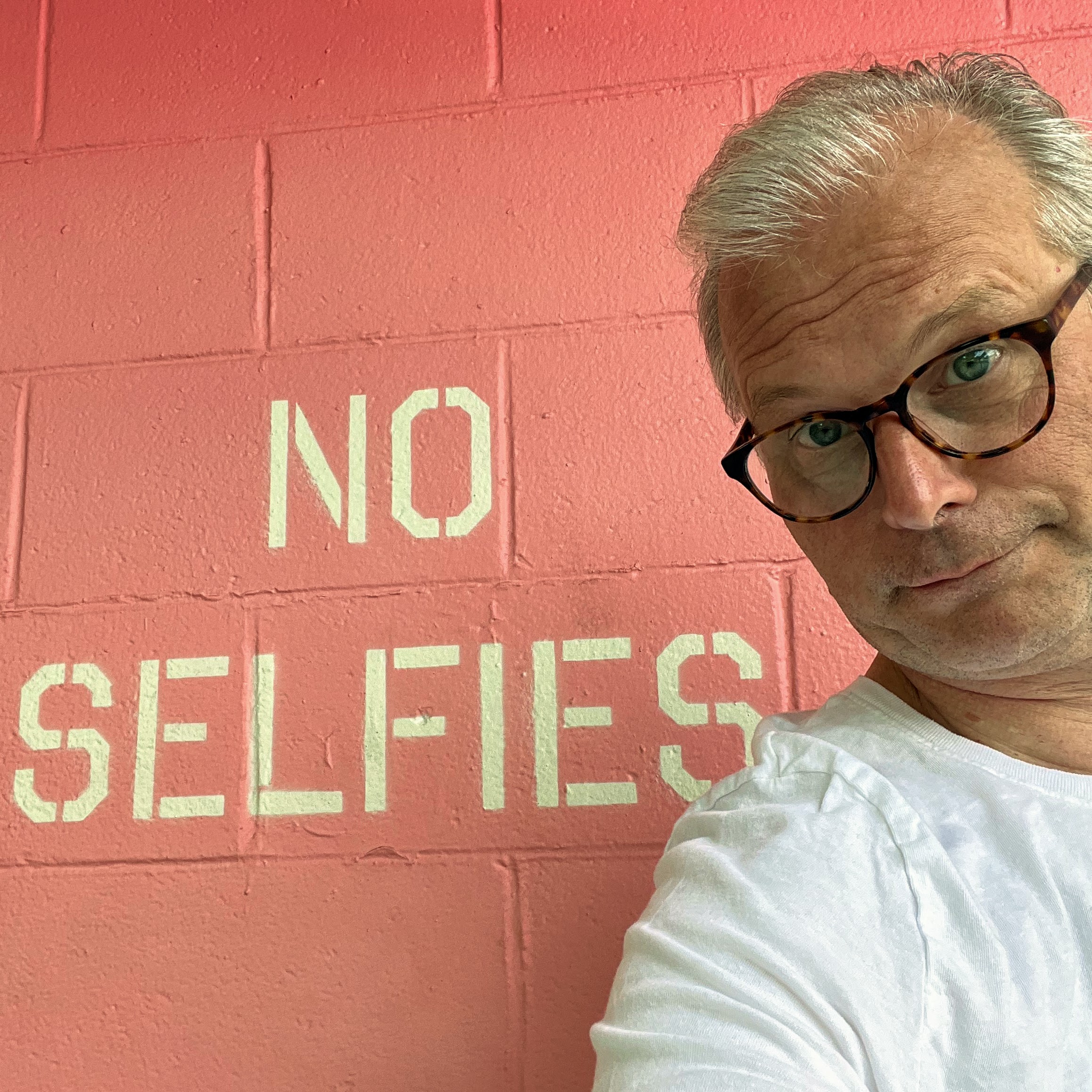
    Person standing in front of a wall with the message stenciled No Selfies
    There Are Rules About Why We Travel

    Lots of different voices in this episode. Listeners adding to our list of travel tips, and conversations with Dr. Sheldon Jacobson about why one of those tips — always catch the first flight out — isn’t always right, and Patricia Schultz about her new book, Why We Travel: 100 Reasons to See the World. All this and more – click here to download the podcast file, go up to the Subscribe section in the top menu bar to subscribe on your favorite site, or listen right here by clicking on the arrow on the player.

    Here is the transcript of TravelCommons podcast #189:

    Since The Last Episode

    • Intro music — Warmth by Makkina
    • Coming to you from the TravelCommons studios in the Gulch neighborhood of Nashville, TN. Not a whole lot of travel since the last episode. Was back in Chicago after almost 2 months away. As a tourist this time, staying in a hotel just off the Michigan Avenue Mag Mile strip, a neighborhood we’d actively avoid when we lived in Chicago — too crowded, too many tourists. But now that we are tourists, maybe it fits a little better. We ended up here more out of convenience than anything else. It was the furthest north in the city that I could find a place to burn off some Marriott points. 
    • It’s been another month where I’ve spent more time planning travel than doing it; stitching together the itinerary for an almost 3-week trip — Nashville, connecting through Chicago (‘cause I’m no longer in a hub city) and Frankfurt, to Split, Croatia; then over to Rome and a train to Naples to get to Positano; then back to Naples for a few days; then to Rome; then to Florence; then back down to Rome to fly home by way of Newark. That looks kinda silly just typing it out. TripIt ended up being a very valuable tool. I forwarded all the various confirmation emails to it, and it did a damn good job of sequencing everything into a single itinerary, which helped me spot holes where I’d screwed up, say, a departure date or had just completely forgot about a trip leg.  But it’s all done; I leave next week. And writing this episode is giving me another good excuse to put off thinking about packing — 3 weeks in a carryon. “Has a washing machine” might’ve been my most critical Airbnb search criteria.
    • Bridge Music — Like Music (cdk Mix) by Analog By Nature (c) copyright 2015 Licensed under a Creative Commons Attribution Share-Alike (3.0) license. http://dig.ccmixter.org/files/cdk/48915 Ft: Phasenwandler

    Following Up

    • Yup, we have mail … and comments.
    • Let’s start with two comments on the TravelCommons Facebook page. First up, Jim McDonough tagged the post for episode #187 with his experience moving to a non-hub airport. Jim writes…
      • “We moved from a hub (DFW, 7 parallel runways plus one other) to a non-hub (SAN, 1 runway). Clearly we were tied to American at DFW (both lifetime Gold), and there really is no single dominant carrier at SAN. We do have some sneaky long non-stops from here, though, like to Hawaii, London, Munich, Boston, New York. None of these on American, though. We are trending towards Alaska Airlines, which has pretty good service and Boeing airplanes, and if there’s an Admirals Club around we can use it flying Alaska. I was among the people who switched to cash-back credit cards during the pandemic when no flying was happening, but I’m rethinking that position with an eye to using miles to go places.”
      • Jim, thanks for that. The American-Alaska relationship has always been good for West Coast fliers. I remember, years ago, flying Alaska from Long Beach up the coast to San Jose. I could never figure out why Alaska was flying that route, but it was handy with my American status.
    • Next up, Thelma Smith adding a travel tip to the post for last month’s episode
      • “Good episode. I don’t travel a lot but one thing I do is if I have to check a bag I use the sky cap. I don’t have to be lugging anything through the airport and the cash comes in handy to tip them.”
      • Thanks, Thelma, for that tip. I’m a big sky cap fan when I have to check a bag — like when I’m loaded up from a big wine country trip — and, yes, cash is absolutely required for their tip!
    • Moving to the TravelCommons website, Geoff Slater left this comment
      • “Excellent return podcast! A very frequent traveler, I agreed with everything. A quibble however was the advice to take a nonstop. While I don’t disagree, I fly in and out of Burlington, VT, so that’s rarely an option. So for me, I also consider my options for connecting airports. As a United flier, Denver in the summer when it’s an option, and then IAD, and trying to avoid EWR. Getting a bit more esoteric for the non-frequent flier, I also consider plane type. And with United 1K status, I also take advantage of the same day change to avoid weather problems.”
      • Geoff, thanks for the comments. Kinda back to my pre-break episode about moving from to a non-hub airport — most of your direct flight options are to hubs like DEN and IAD. Your strategy on hub selection is smart; pick hubs off by themselves with long well-separated runways. When I was doing work in north Jersey, we used to joke that anyone spitting on a runway at EWR would mean an hour delay; the runways are too close together to allow parallel take-offs and landings in all but the best of weather. Your comment about plane type — rather than esoteric, I think it’s more of a graduate-level flight planning tip. The first cut is regional jet vs. main-line jet. I’ll always pick the, say, United Airbus 319 over the American Eagle Embraer. Making a choice between main-line jets can be a bit more subtle; different fliers will make different trade-offs between size — flights with smaller capacity jets might be sacrificed when storms reduce flight slots but they’re quicker to get out of if a delay has tightened your connection. Again, graduate-level linear programming optimization algorithms for flight planning.
    • On Twitter, Kendra Kroll offered up a travel tip
      • “Know names of cities in local vernacular. I’ll never forget when folks on our Southbound train to Rome missed their stop by several hours as they didn’t realize Firenze = Florence!”
      • Ouch! That’s a good tip; probably a next-level version of my Know Your Geography tip. For extra credit, be able to recognize your destination in the local non-Latin alphabet. I was in Tokyo back right before they moved the old Tsukiji Fish Market. The morning after I arrived, I was up early with jet lag and so walked over to the market. Someone had recommended a small sushi joint there, so I went looking for it. The recommendation gave the name in Latin characters but the signs in the market were only in Kanji. I eventually found a guy at an information desk who gave me directions to the place, but something to keep in mind when I travel to, say, Greece or Georgia — the country, not the state.
    • And finally, Aaron Woodlin responded to my re-tweet of an ORD TSA post with a picture of what one passenger pulled out of their carry-on and put in a bin to pass through the X-ray machine — a meat cleaver, a couple of knives, a couple of saws… Somebody who’s definitely unclear on the concept of “no sharp objects in your carry-on.” Aaron’s cut –
      • “What I really don’t get are people who don’t keep their range bags and carry-on luggage separate, and end up unintentionally packing heat at the checkpoint.  If you can afford plane fare, guns and ammo, you can spring for separate bags!”
      • Range bag, tool box… I can just imagine being the TSA guy shaking his head as the image of a bin full of knives and saws comes across the monitor. The guy is aware enough to know that you need to pull metal stuff out of your bag, but not hip to the fact of why. And now you’re the TSA guy who has to explain it all to him. 
    • And as always, thanks to all of you for the comments! Some great stuff here.
    • I think I’ve mentioned in prior episodes that I’m on Apple’s iPhone upgrade plan. Every year I get the new phone, send in my old one, and it resets the payment clock. Kinda like leasing a car but with lower monthly payments. Anyhow, a few weeks back, I’m scrubbing through Apple’s hour-and-a-half long announcement video — skip all the Apple Watch stuff, slow down on the new AirPods, and then settle in for the iPhone 14 walk through. Nothing earth-shaking; I’m liking the new purple color. But then, as they were wrapping up, I had a record-scratch moment — no SIM tray! What, what? Yup, for US iPhones, no more SIM tray; it’s all internal eSIMs! Isn’t that great? No more searching for a paper clip to pop out the tray, losing the little nano-SIM, …. No, it’s not great, at least for those of us who travel internationally. I’ve talked many times over the years about using local SIMs. Most recently, in episode #181, I talked about, at the start of our Puglia bike trip, spending 15 minutes and $25 in a Telecom Italia store for a SIM that gave me a local phone number (very handy for restaurant reservations) and 70 GB of data. And now next week, all I have to do is load some money onto that SIM through the Telecom Italia website, and I’m good to go when I connect thru Frankfurt, and land in Croatia and Italy. But what about an eSIM? I couldn’t find any mainline Italian mobile carrier that offered a prepaid eSIM. Same with the UK. When I bitch-tweeted about this, aloSIM, a company that sells eSIMs for many countries, quickly responded “Well, our Italy eSIM data packages start at $4.50 for a week of data…” I hit their website. Their $4.50/week gives 1 GB of data. For an extra 50¢, I can get 10x that — 10 GB of data for $5/week. I tweeted that back. As you might guess, no response from aloSIM’s social media team. So, I’ve dropped off the iPhone upgrade wheel. I know I’m an edge case, and I think this could accelerate the push toward eSIMs. But like when Apple dropped the headphone jack, I think they’re 12-18 months ahead of the curve for frequent international travelers and I need something that works today, where the curve is right now. So I’ll wait a bit, like TravelCommons listener Jerry Sarfati who said he’s waiting for the “iPhone 15… with a USB-C charger.” I really hope it comes in purple too.
    • And if you have any travel stories, questions, comments, tips, rants – the voice of the traveler, send ’em along to comments@travelcommons.com — you can send a Twitter message to mpeacock, post your thoughts on the TravelCommons’ Facebook page or the Instagram account at travelcommons — or you can post comments on the web site at TravelCommons.com.
    • Bridge Music — Somewhere by spinmeister (c) copyright 2016 Licensed under a Creative Commons Attribution Noncommercial (3.0) license. http://dig.ccmixter.org/files/spinmeister/53428 Ft: DJ Vadim

    When Not To Take the First Flight Out

    • Moving to the mail portion of the episode, a day after I published the last episode, I saw an email in the TravelCommons inbox with the subject “Is the first flight of the day still the best one? No. – air travel scientist for interviews.” This caught my eye because the 5th of the 13 tips to avoid airport chaos I’d just published was “catch the earliest flight you can”. So I replied to the email “Tell me why I’m wrong!”
    • Which led to this conversation with Dr. Sheldon Jacobson, Professor in Computer Science at the University of Illinois. Over the years, Dr. Jacobson has done projects using operations research models to optimize aviation security. But most recently, he wrote about how the received frequent flier wisdom about catching the first flight out might not always be right. So I started our discussion asking him “Where did I get it wrong?”
      • Sheldon: When you’re flying in and out of hub airports, conventional wisdom is, in fact, correct. You do want to take the first flight of the day because at a hub airport, there’s a lot more flexibility once a plane arrives at the end of the day. It’s going to be cleaned, it’s going to be maintained. Its gonna be fresh for the new day. If it turns out that some of the crew members become unavailable, you have alternatives because so many people have bases. So, this is in Chicago and Dallas for American, For United, you also have Washington Dulles as well as Chicago. For Delta, of course, it’s Atlanta, Minneapolis, Detroit. So that’s a great strategy. But what if you’re not in a hub airport and that’s when things start to get more nuanced. And the best way to think of this is that every airplane as well as every crew when they fly from city to city, they are a link in a chain. At the end of the day, you think, “Okay, the chain ends.” Actually, it doesn’t. because the first flight of the day is the connection and the link from the last flight of the previous day. And all of this comes out and starts to impact that decision of the first flight of the day. Because if that flight comes in late, remember the last flight of the day, that’s going to be the first flight out of a regional airport. So as a result of that, you actually want to take the second flight of the day out of a regional airport or a smaller large airport. That’s the best strategy when it comes to these secondary and tertiary airports.
      • Mark: Actually, what you’ve said, I’ve seen that happen in smaller regional airports, say Lexington Kentucky, Appleton, Wisconsin, where that first flight of the day is not on the ground, so it’s got to come in from a hub. Is there a split where, say, larger non-hub airports, the conventional wisdom still holds? Say where I am now in Nashville, or something like in Indianapolis? Where do those fall as far as the conventional wisdom on catching the first flight out?
      • Sheldon: Yes, certainly when you come to Nashville, Indianapolis, Columbus,  Ohio, Pittsburgh,  Pennsylvania — some of these have been de-hubbed over the years. You’re getting into a point that you have a lot of choices available. So then it becomes a little more nuanced because you could book the first flight on, let’s say American and that one may have difficulties because that plane came in overnight and it was delayed because of storms in Chicago. But on the other hand, if there are options on Delta which are coming from Atlanta where there were not storms, you can always then get switched over for it. So when you get into those middle airports, they’re not full hubs, but they’re not the small regionals that have two flights a day, then it becomes a little more nuanced. And then you start to look across airlines as opposed to just within the airline.
      • Mark: Now if we pivot just slightly and think about different types of airlines. So if I think about hub-centric airlines, like the traditional United, American, Delta versus, say, a Southwest, which I’ve joked in the past feels like they’re running milk runs across the country. So there’s not necessarily a hub, just that plane is running a line. Is there a difference between those two types of airlines on that first flight out?
      • Sheldon: There is, for a variety of reasons. With Southwest, they’re trying to pack as many segments or links per day for every airplane. That’s how they stay profitable. Their turn times are tremendous, but it also makes them more vulnerable to any kind of mechanical or weather delays or air traffic control slowdowns because they don’t have the slack built into their system in their links. As a result of that, when you get to the end of the day, they still have to abide by the FAA regulations in terms of crew rest. And the question is, even though they are in some sense of point to point airline, they have areas of the country that have a concentration of flights like Dallas Love for example, like Chicago, like Baltimore-Washington, where they traditionally had a lot of flights. So you do have to look then, even though they aren’t traditional hubs, they operate similarly. Where is the crew located; where they choosing to live? And that’s an important component because when you’re trying to reschedule because of delays, the flight that you’re going to take out at 6 am may have come from a city where the plane only arrived at midnight. The flight crew needs the rest. They will not be able to leave on time. But if you switch crews and you have the flexibility because you have a sufficient number of crew members. It solves the problem. Is that going to exist in your city? So even though Southwest doesn’t have the traditional hub and spoke system, they have airports that, in some sense, act like their hubs.
      • Mark: Sheldon, how much of this do you think is a function of the current tight labor market that airlines say they’re operating in?
      • Sheldon: Now the situation we’re in, which was brought on by COVID, of course, meant that they had a tremendous amount of layoffs and looking down the road, they were trying to survive financially. And now they’re in a situation where they have to rehire but retrain all of these pilots. People think “Oh, you haven’t flown for 8 months, 9 months? We’ll just put you in a cockpit and you’re fine.” It doesn’t work that way. Once you’ve been off for 6 months, it’s as if you’ve never flown. You still have the 1,500 hours which are required to fly, but you get rusty. And the pilots themselves say “I’m really not as comfortable as I used to be,” especially on landings, which is the most critical activity that they do once they’re in flight, it’s pretty much status quo. Taking off is reasonably straightforward, but landing is the tricky part. And they just feel a little less comfortable unless they have the training. And the fact is they want to be safe as much as the passengers and the airline’s want them to be safe. Getting these people back in the cockpit training and they have so many flight simulators. So much training that needs to be gone through. This is a non-trivial process.
      • Mark: Sheldon, thank you very much for that. That’s very helpful. Any last thought, any last tips as people are looking to navigate through the back end of the summer season and into the holiday flying; things that you use to avoid airport chaos?
      • Sheldon: Well, we’ve just now entered the post-summer/fall travel period and I check the numbers daily in terms of screenings at TSA checkpoints and the numbers are trying to come down, which means that there’s gonna be a lot less stress and strain on the system. The airlines are starting to ramp up their schedules. I’ve booked some things out for later in the fall and they’re already changing the schedules. So, I know that they’re starting to add more flights and more opportunities for people. For the holiday travel season this year, Christmas and New Year’s fall on a Sunday. And that means that people are going to be traveling on Friday and Saturday. If you can travel on Thursday or Wednesday, you may find it a lot less taxing. So, thinking a little bit ahead in that regard may be very helpful. You can’t predict weather storms, a nor’easter is going through, you know, it’s late in the year. The other strategy that I’ve used because I’ve mostly lived in non-hub cities is that there’s always been a dominant airline and a non-dominant airline. And the strategy I’ve always used is to always become loyal to the non-dominant airline. And the reason being is that when the non-dominant airline had problems, they were always gracious to put you on the dominant airline, which had much more choices. And as a result, I rarely got stuck because if I was on the dominant airline, trying to find a plane on the non-dominant one was much more difficult to get the seats available
      • Mark: That’s an interesting strategy. Kind of counterintuitive, but as you explain it, it makes sense.
      • Sheldon: I have never gotten stuck because by flying the non-dominant, even out of a hub airport. You think of a place like Detroit where they have Delta as the dominant airline. If you fly American out of there, the people are working extra hard to get your business. And as a result of that, I’ve always found service is better in the non-dominant airline, even in the hub cities where they’re competing.
      • Mark: That’s a good tip. Thanks for that Sheldon. Dr. Sheldon, Jacobson at the University of Illinois at Champaign-Urbana. Thank you very much for joining us on the TravelCommons podcast.
      • Sheldon: Thank you. It’s wonderful to be with you.
    • Bridge Music — Hear Us Now (poptastic mix) by Scott Altham (c) copyright 2009 Licensed under a Creative Commons Attribution Noncommercial (3.0) license. http://dig.ccmixter.org/files/scottaltham/20747

    Why We Travel

    • Some years ago, on some milestone birthday (I’m not saying which), my kids gave me the book 1,000 Places to See Before You Die. Hmm… was there a message somewhere in that gift? Not that they would admit. But it was a fun book flip through — to remind me of past trips and give me ideas of places to go next. So when the TravelCommons inbox offered up an opportunity to interview the author, Patricia Schultz, about her new book, I jumped at it.
      • Mark: Patricia, thanks for joining us on the TravelCommons podcast. Your new book is Why We Travel: 100 Reasons to See the World. That topic — why we travel — has been a common one here on TravelCommons; how travel expands our horizons, our perspectives, helps us connect with others and with ourselves as we lose ourselves in the “otherness” of a new place. So Patricia, help us. What’s your take on why we travel?
      • Patricia: Well, I used this period of the pandemic to have that conversation with myself. This moment of COVID allowed me this unprecedented moment where suddenly I was very stationary. I thought it was very important for me, as a travel writer, to reassess all over again the importance of travel. But the “why” needs to be kept very forefront, so that we have that appreciation, and we understand that we’re privileged and it’s an honor and it’s something that you need to travel meaningfully and not just on automatic pilot. And I think first and foremost it’s, for me, it’s food for my soul. And as you said, it opens our perspectives and it opens our heads, it opens our hearts. You mentioned connecting with other people. That’s part of opening your heart with that exchange with your Uber driver or your guide or the lady in the open-air market who’s selling her tomatoes and whoever you have that moment with. It’s all the people along the way that you meet and accrue and collect all of these experiences that are life lessons. Not just the logistics and the details of trip planning, but life lessons as they pertain to what you bring home with you and how you deal with life and how you’ve become more resourceful and the “daily-ness” of life is dealt with in a different way. I know I’m more tolerant. I know I’m more respectful in general. I know that I’m more curious and that’s what gets you out the front door at the end of the day, which is often usually the most difficult part of all of this — getting going.
      • Mark: Absolutely. Patricia, the book is a great mix of beautiful photos and quotes about travel. Definitely a book that you need to have in your hand rather than on your tablet. What was your curation process? How did you pick the pictures and the quotes that went into the book?
      • Patricia: I’m so glad that you touched on that because I myself thought that a book that seemingly this simplistic would just kind of write itself.
      • Mark: It’s never that simple though. Right?
      • Patricia: No. One of the quotes I used is by Beverly Sills, the great operatic singer, who said there are no shortcuts to any place worth going to or anything worth doing, I might add as a postscript, and writing one of them. But the photos, which are not mine I’m sorry to say, they’re colorful and they’re energetic and they’re vibrant and there’s a great sense of place and excitement to them, I think. And that’s what we were aiming for to have this book, everything, kind of jump off the page at you because that’s part of the message, the message of how exciting and exhilarating travel can be and then to match it with the appropriate message. The message that is embodied in a quotation or in an aphorism or in a list that I make up or in an anecdote that matches what the photograph recounts. So, it all was a real departure for me because my books until now have just been a kind of encyclopedia of 1,000 places around the world. But that same broad, comprehensive mix of experience and geography and message and importance of travel that I tried to infuse throughout 1,000 Places is the same mix that I tried to embed in every aphorism and in every photo and in the sequence of the book. It’s not a big book. It’s a hardcover book. It’s not oversized and it’s not all that many pages; it’s somewhere over 100 pages. But there’s a lot that can be said because travel means many, many, many different things to many different people. But at the end of the day, it makes us better people and that’s kind of Period, Amen!
      • Mark: And it’s certainly more focused, as you said, on inspiring people to travel, to pull their bag out from under their bed rather than a tour guide’s list of where to go, or some expert’s advice on how to pack that bag. But some might see this collide with the ethics, the concern about climate change. How do you square that circle?
      • Patricia: If you travel with respect and with that, conviction to see the world for all the right places, and not because you’re checking off countries or you’re filling empty time. But if you want to experience another culture and bring those experiences home with you, ultimately, probably the best thing we can hope to take away from travel is that when we return to our homes, we are equipped to make your best life for yourself and your neighbors and your community and the world at large. And also, the very notion that travel isn’t inherently international or a 12-hour long haul flight to get you to the other side of the world. You know, you can walk out your front door and walk around the block in midtown Manhattan where I live and that’s travel enough for many people. The people watching, the theater of the street or filling your car or charging your car and taking that road trip to the local state park. So, there are all kinds of ways that you can easily accommodate all of those concerns if you travel well. And I don’t mean five-star deluxe and I don’t mean remote dream destinations of Mongolia and Africa, although those are all pretty fantastic as well. Travel well in that you really maximize the time made available to you and the money that’s in your budget. But I think you just need to go with the right head and the right head to me has always meant curiosity and respect. And if that’s the case then you will travel respectfully, and you will address climate change in a way that as an individual we can.
      • Mark: Fantastic. Well, Patricia Schultz, author of the new book Why We Travel: 100 Reasons to See the World. Patricia, thanks for stopping by the TravelCommons podcast to give us your thoughts on why we should travel. Really appreciate the time.
      • Patricia: Thank you very much. Thank you for having me.

    Closing

    • Closing music — Pictures of You by Evangeline
    • OK, that’s it, that’s the end of TravelCommons podcast #189
    • A little change of pace; a lot less of my voice and more of others. I hope you enjoyed it and I hope you decide to stay subscribed.
    • You can find us and listen to us on all the main podcast sites — Apple Podcasts, Spotify, Stitcher, SoundCloud, Google Podcasts, and Amazon Music. Or you can also ask Alexa, Siri, or Google to play TravelCommons on your smart speakers.
    • And across the bottom of each page on the web site, you’ll find links to the TravelCommons’ social  — Facebook, Twitter, Instagram, and the YouTube channel. And while you’re at TravelCommons.com, you can check out the show notes page for a transcript and any links I’ve mentioned. Or you can click on the link in this episode’s description in your podcast app to get to the show notes page.
    • If you’re already subscribed, how ‘bout leaving us a review on one of the sites? Or better yet, tell someone about TravelCommons. That word-of-mouth thing; it’s really the only way to grow.
    • If you have a story, thought, comment, gripe – the voice of the traveler — send ‘em along, text or audio file, to comments@travelcommons.com or to @mpeacock on Twitter, or post them on the TravelCommons’ Facebook pageInstagram account,  or website at travelcommons.com. Thanks to everyone who has taken the time to send in e-mails, Tweets and post comments on the website
    • Follow me on Twitter
    • “Like” the TravelCommons Facebook page
    • Direct link to the show
  • Podcast #188 —  My Top Travel Tips to Survive Airport Chaos

    Podcast #188 — My Top Travel Tips to Survive Airport Chaos

    Stenciled graffiti of gasmask-wearing woman carrying bags labeled Hope and Dreams to avoid travel chaos
    Carrying Travel Hopes and Dreams to the Airport

    Back behind the microphone after a couple of months of setting up the new studios in Nashville. I’ve been dishing out travel advice to friends and family swept up in this summer’s travel chaos. I’ve distilled all those texts and messages down to my top 13 travel tips to help those traveling through the rest of the year. We also talk about the countries that have dropped all of the COVID testing requirements for inbound passengers, noodle about the rationale for JetBlue’s dogged pursuit of Spirit Airways, Delta’s new time limits for their Sky Club lounges, and why frequent flier award travel is suddenly a bargain again. All this and more – click here to download the podcast file, go up to the Subscribe section in the top menu bar to subscribe on your favorite site, or listen right here by clicking on the arrow on the player.

    Here is the transcript of TravelCommons podcast #188:

    Since The Last Episode

    • Intro music — Warmth by Makkina
    • Back after a June/July hiatus to relocate the TravelCommons studio — and the rest of our worldly belongings — from Chicago to Nashville, Tennessee. So that’s been the most recent travel, the drive down I-65 and then digging into the different neighborhoods and brewery taprooms here. You know you haven’t been on the road when Lyft pushes you a coupon for just opening their app and Uber sends you emails like “You haven’t taken a ride with us in a while, so we’re checking in to ask for some feedback…. Let us know why we haven’t seen you in a while.” The right response was “I haven’t had a reason to use Uber” but I was really tempted to hit “Prices are too high” or “ETAs are too long”. I dunno, my next Uber ride will probably be one of the Lime e-scooters I’m seeing all over town here. 
    • Of course, if there was a time to drop off the road, this summer was it. With flight cancellations rising — the US July Fourth weekend a train wreck with 500 flights canceled on the Friday and then 600 on Saturday, accented by 4,000 delays. And then record-high gas prices and still screwed-up rental car fleets make for the chef’s kiss on top of it all, turning the fly-vs-drive trade-off into some witches brew of partial differential equations. At some point, you just throw the suitcase back in the closet and treat your Weber to a load of premium lump charcoal. As if the frequent traveler rule of “Avoid holiday weekend travel” needed another proof point.
    • So while I wasn’t in that maelstrom — though I’m not sure unpacking a hundred or so moving boxes was all that much better — I have been an interested, maybe even involved observer with friends and family calling me, messaging me — “Hey, Mark! I have a question for a travel guru and thought of you first”– trying to help them navigate as best I could. And after I dished out the same advice more than a couple of times — indeed, often copy/pasting the same suggestion from one text stream to another — I decided maybe this would be a good time to pull it all together in a single place, maybe even a podcast with, better yet, some written show notes for easy reference. Stay tuned; it’s coming up in a couple of minutes…
    • Bridge Music — Revolve mix by cinematrik (c) copyright 2005 Licensed under a Creative Commons Noncommercial Sampling Plus license. http://dig.ccmixter.org/files/hisboyelroy/430

    Following Up

    • In June, while I was wrapping myself in bubble wrap and packing tape, the US, Canada, most European and Latin American countries dropped their inbound COVID testing requirements. I mean, it makes sense. These testing requirements were put in place to keep COVID at bay, and they failed miserably. At the beginning of last December, the US tightened its inbound testing requirement to try to keep out the then-new Omicron variant, but by the end of the month, it was rampant. And yet the US kept that 24-hour testing requirement for another 7 months — long after the rationale had been overrun by real life. But, give credit where credit is due, they did finally drop it. One less thing to cause back-ups at airports and border crossings, I guess. It’ll be interesting to see if the testing requirements start cropping up again if we get another autumn surge.
    • The Spirit-Frontier-JetBlue Dance Macabre seems to have finally ended with JetBlue’s escalating share price offer trumping Frontier’s more obvious business case of merging two ultra-low cost (and ultra-low service) US carriers. JetBlue’s desperation just didn’t make sense to me — so yes, maybe they expand their Florida footprint — always important for an East Coast airline — but at what integration costs. I’ve always enjoyed flying JetBlue; it felt like they tried to add just a touch more to their service to differentiate themselves from, say, United or American. So now merge that with Spirit, which seems to be a kinder, gentler Ryanair, or maybe a Ryanair but without the chip on its shoulder? Where’s the sense in that? Then someone suggested that I had completely missed the plot. It’s not about Florida; it’s not about low-cost; it’s about the pilot shortage. JetBlue and Spirit both fly Airbus. JetBlue’s other growth option would be Alaska Airlines, which is a Boeing shop. It’s much easier to cross-train and leverage pilots across, say, an all-Airbus fleet than a mixed one. It’s the same reason Southwest and Ryanair are so rabidly focused on the Boeing 737, and Spirit and Frontier on the Airbus A320. OK, got it. But I’ll be a bit sad if this whole mess ends up “Spirit-izing” JetBlue.
    • “We’re not a WeWork,” said the head of Delta’s Sky Club lounge system as they put new limits on lounge access. You can’t get in earlier than 3 hours before your departure time. So no more checking out of the hotel to post up in the Sky Lounge for free food, drinks, and WiFi until your afternoon flight. I gotta tell you that this wouldn’t be a big thing for me if I was a regular Delta flier. I’m always trying to figure out how to spend the least amount of time in the airport. Maybe a couple of times, I’d set up camp in the Admirals Club for a morning of calls before, say, a noon flight out. But I’d much prefer working my hotel status to get a later room check-out and then take my calls there, by myself, instead of hoping to find a club workstation that wasn’t next to some sales guy loudly regaling somebody about the deal he just closed. Now to me, though, the more interesting piece of this story is the other limit they wanted to put in but couldn’t — no lounge access after your flight had landed. Now that one would’ve left a mark. Lots of times, I’d wedge my flight into a 2, 3-hour calendar window between phone calls. And for me, it was those after-flight calls where the lounge was critical. I’m not surprised that Delta had to quickly back off of that rule. But they had to do something because, as the main floors of the terminals have become more of a zoo, and as the lounges have added more free stuff — better food, free drinks — they’ve become jammed. It’s tough to find a place to sit before the morning and evening flight banks, let alone a place to take a call. Amex is upping their price, starting this February to charge $50 to get your guest into a Centurion Lounge with you. Looks like Delta is pivoting the other way and trying rationing instead. It’ll be interesting to see which way American and United go.
    • There’s been a good bit of commentary over the past few years about the devaluation of frequent flier miles, that they’re worth less than they used to be, that the old benchmark of 2¢/mile no longer holds because airlines are pushing up the number of points needed for a flight, in large part because of the increased supply of points sloshing around the system from when airlines sold huge tranches of points to credit card companies for cash. The comparison to the real economy — how expansion of monetary supply leads to inflation — is left as an exercise for the listener. But I noticed something as I was working on flights for an autumn trip back to Europe — a week in Croatia at the end of September and then a couple of weeks back in Italy. It seems that the cost increases in frequent flier miles haven’t kept up with their real dollar cost increases for flights, and the resulting gap had me busting through that 2¢/mile benchmark on every flight I booked. Maybe if I was more ambitious, I’d find an arbitrage opportunity somewhere in there, but for now, I’m just happy to get some decent deals with my United miles. Now if the euro-to-dollar parity exchange rate holds, it’ll be a real bargain trip. 
    • And if you have any travel stories, questions, comments, tips, rants – the voice of the traveler, send ’em along to comments@travelcommons.com — you can send a Twitter message to mpeacock, post your thoughts on the TravelCommons’ Facebook page or the Instagram account at travelcommons — or you can post comments on the web site at TravelCommons.com.
    • Bridge Music – Velvet Green of Mystery (Instrumental) by Doxent Zsigmond (c) copyright 2014 Licensed under a Creative Commons Attribution Noncommercial (3.0) license. http://dig.ccmixter.org/files/doxent/48114 Ft: Kthugha, Jeris, Martijn de Boer

    My Top Travel Tips for Avoiding Chaos

    • As I mentioned at the top of the show, I’ve gotten pinged a bunch of times over the past couple of months by friends and family who, stuck in the midst of some travel challenge (not an uncommon event this summer), pinged me on Twitter, Facebook Messenger, iMessage asking “What do I do?” I thought this would die down come Labor Day with kids heading back to school ending the summer travel season. But over the past couple of weeks, I’ve been seeing a steady stream of articles headlined “Travel Woes Won’t End This Summer,” saying an extended collision of staff shortages and “revenge travel” traffic will keep things gummed up until at least October, after which we’ll slam right into the Thanksgiving and Christmas travel rush. Lovely. So in the spirit of those “I’m a flight attendant and here’s what you should do ” articles that have popped up this summer, here’s my “I’m a 37-year road warrior; these are my tips for handling travel chaos” list. 
    • Most of this list are things you do before the day of travel — planning and preparation. That colonial era road warrior Ben Franklin said “an ounce of prevention is worth a pound of cure.” Not sure if he wrote that about his trips to England or France, but it still applies to travel. What you do the month or two before travel day is way more important that what you do that morning. So let’s get into it.
      • First, figure out if you really need to fly. My normal fly-vs.-drive tipping point is 350 miles; anything less and I’ll drive it. But, all this travel chaos might change your calculus. If you fly, figure the airport logistics will add 3 hours to your in-flight time. Maybe the stories of baggage check and security lines have you thinking of arriving 2 hours before your flight. And when you arrive, the crowds mean it could take you another hour to de-plane, collect your luggage (if they haven’t lost it), and find your rental car or wait for an Uber. And that’s if there are no flight delays. Maybe the sum of all this starts to bump up your fly-vs.-drive breakeven point to something closer to 400 or 500 miles.
      • If you’re flying, sign up for TSA PreCheck. It’s $85 for 5 years of hassle reduction or better yet, if your revenge travel is international, sign up for Global Entry for $15 more and get Pre-Check plus no line at US passport control. And a lot of travel credit cards will credit you the $100 as one of their benefits. Just do it; the difference between a 5-minute and 45-minute line at the start of your trip is huge.
      • Fly Non-Stop — It’s obvious because it’s the cardinal rule of air travel. High passenger load factors combined with summer thunderstorms almost guarantees late arrivals and missed connections. And an intermediate stop adds one more point of failure, one more place your luggage could fall off the trolley, one more opportunity for the airlines to screw up. Pay the extra $100 for a non-stop flight.
      • If you can’t fly non-stop, skip the tight connection; step away from anything less than an hour.  Yes, we usually want to get to our destination in the shortest possible time, but accepting a connection of 1 hour or less…. Think about it – a 15-minute delay on your flight into a big hub like Chicago or Denver or Detroit (which is as good as on-time for most airlines nowadays) and you’re sprinting across terminals and concourses just to beat the closing door.
      • No matter non-stop or connection, catch the earliest flight you can. Delays stack up as the day wears on.  As your airplane goes from airport to airport, the probability of it getting stuck increases.  Overnight, airlines have a chance to recover – late planes finally get their destinations and operations groups can reassign planes.  So while the last flight out can be a crap shoot, I rarely hit a delay on the first flight out.
    • So you’ve done a good job of planning, so the night before you leave…
      • Pack so you can carry on your luggage. It’s summer, so no sweaters, no coats; you’re packing your thinnest clothes. I mean, some years back, I got everything I needed for a 10-day trip in March to Iceland and Southern Spain into a 22-inch carry-on. So unless you’re doing multiple formals, everyone in your travel party should be able to fit into a carry-on sized bag. You can save $25/bag and increase the probability of having clean clothes at your destination.
      • And if you are doing multiple formals or for some other reason need to check your bags, spread everyone’s clothes across all the bags. It’s rare for an airline to lose all of your checked bags. This way, no one is having to show up at the first formal in an outfit from the nearest Walmart.
      • While you’re packing, charge up your battery packs. We can’t travel easily anymore without a working mobile phone. It holds our boarding passes, proof of COVID vaccination, gives us gate change and flight delay notifications, and routes us around traffic jams. A dead phone while flights are being canceled is more than just a bit of an inconvenience; having that second or third charge immediately available is critical when trying to swerve a long delay.
      • And then download your carrier’s app and an independent flight tracking app. Carriers have been pushing more and more functionality into their apps — boarding passes, one-day lounge passes, real-time gate change and flight delay notifications, canceled flight rebookings…. — so if you haven’t already, you’ll want to download that and log into it. But I also run a couple of independent apps as back-up, maybe to get a “second opinion” on delays. The free FlightAware app has been my go-to for years. Last spring, in episode #186, I talked about another flight tracker app, Flighty, that I tried out on our April trip to Santa Fe, NM. The Pro version is nice if you’re willing to pay $50/year, but not enough to get me to ditch FlightAware.
    • And now we’re here, travel day. You’re all ready; your flight hasn’t been canceled or delayed… yet. Here are some “day of” tips if things start to get a little bumpy…
      • Keep moving forward – if you hit a delay, always keep moving forward, in the direction of your destination; the closer you are, the more options you’ll have. Last month, my daughter Claire was flying from Denver to Manchester, NH, a tough itinerary, especially now with carriers pulling back from smaller airports. She found a route on American – Denver to Charlotte to Manchester, though it left much later than the rest of her team, so she had some hours to kill at DIA. And pretty soon, she started to get alerts from the American app — storms were forecasted in Charlotte, so if her plans were flexible…. Well, they weren’t completely flexible; she needed to get to New Hampshire that night. She pinged me – “They’re offering me a standby seat on an earlier flight to Charlotte. Should I take it?” she asked. “Absolutely!” I said. It gets you out of the Rockies and onto the East Coast. Still not drivable, but if your Manchester flight gets canceled, maybe you can get close — like to Boston or Portland, ME and then drive from there. This is another good reason to do carry-on; it’s tough to call a quick audible like this when someone else has your bag.
      • And this leads me to my next travel day tip — know your geography. Claire and I joke about this. All that time she spent learning new and unique ways to do arithmetic (something about columns and diagonals; I could never figure it out), so she’d have a better feel for numbers. It crowded out those grade school geography and map lessons us Boomers took all those years ago. Came in handy when I was helping her think about what New England airports would be good alternatives to Manchester, to give her flexibility if her flight got canceled. In New York, the LaGuardia to Newark pivot is easy, as is the SFO to Oakland or San Jose redirect, but others aren’t so obvious.  Everyone knows that Chicago has two airports – O’Hare and Midway.  But what about Milwaukee’s Mitchell Field 80 miles north?  If PHL is in trouble, how many folks think about Harrisburg or Allentown?  I think about alternatives in two rings – within 60 miles – say, SNA and LGB for LAX; and then within 100-120 miles, which now picks up Palm Springs and San Diego for LAX.
      • And when something goes sideways, don’t wait; hit every contact channel the airline has immediately — dial the customer service number while standing in line for the agent. Hit their airline’s Twitter account too; it can be a good side channel into customer service. You never know which one will open up first. Indeed, I often find I’ll get what I need from “at-ing” and DM’ing the airline on Twitter before the hold music stops playing on the 800 number. Bonus pro tip — have your confirmation number easily available. It makes it much easier for the agent to find your reservation and help you out.
      • And one last thing, bring cash. Way back in episode #136, I talked about what seems to be a generational split, between residual Boomers like me and older Millennials, on the need to carry cash. No matter which side you sit on that split, it’s a fact that cash can get you out of a packed airport bar quicker than a card if you need to bolt for your flight — maybe a delay got pulled up, your gate got moved to the next terminal, or you just misread the boarding time. Being able to lay down, say a twenty and 3 ones, on the bar with your check is a whole lot quicker than waiting for the waitress to show back up, take your card, walk to the back to run it, and then bring it back again for you to sign.
    • So there you go, all the things I’ve been texting folks this summer, and then some. I hope it helps you too. If you’ve got a tip, a tactic I missed, please send it along. We’ll add it to the list and talk about it on the next episode.

    Closing

    • Closing music — Pictures of You by Evangeline
    • OK, that’s it, that’s the end of TravelCommons podcast #188
    • I hope you enjoyed the show and I hope you decide to stay subscribed. Sorry for the June-July gap. It took me longer than I thought to pack and then unpack all our worldly belongings.
    • You can find us and listen to us on all the main podcast sites — Apple Podcasts, Spotify, Stitcher, SoundCloud, Google Podcasts, and Amazon Music. Or you can also ask Alexa, Siri, or Google to play TravelCommons on your smart speakers.
    • And across the bottom of each page on the web site, you’ll find links to the TravelCommons’ social  — Facebook, Twitter, Instagram, and the YouTube channel. And while you’re at TravelCommons.com, you can check out the show notes page for a transcript and any links I’ve mentioned. Or you can click on the link in this episode’s description in your podcast app to get to the show notes page.
    • If you’re already subscribed, how ‘bout leaving us a review on one of the sites? Or better yet, tell someone about TravelCommons. That word-of-mouth thing; it’s really the only way to grow.
    • If you have a story, thought, comment, gripe – the voice of the traveler — send ‘em along, text or audio file, to comments@travelcommons.com or to @mpeacock on Twitter, or post them on the TravelCommons’ Facebook pageInstagram account,  or website at travelcommons.com. Thanks to everyone who has taken the time to send in e-mails, Tweets and post comments on the website
    • Follow me on Twitter
    • “Like” the TravelCommons Facebook page
    • Direct link to the show
  • Podcast #187 — Moving to a Non-Hub Airport; What Makes A Great Taproom?

    Podcast #187 — Moving to a Non-Hub Airport; What Makes A Great Taproom?

    Taproom Draft Beer Taps Arranged as a Smiley Face
    I’m Happy To See You Too!

    The last episode recording in Chicago before we relocate the TravelCommons studios, and our lives, down to Nashville. We close out our threads on in-flight mask mandates and hotel housekeeping, and critique an academic paper about the moral hazard of frequent flier elite status. I talk through the changes I’ll have to make when flying out of a non-hub airport. And then, as I’m making a list of the Chicago breweries I want to re-visit before leaving, I think through the characteristics that makes a taproom great. All this and more – click here to download the podcast file, go up to the Subscribe section in the top menu bar to subscribe on your favorite site, or listen right here by clicking on the arrow on the player.

    Here is the transcript of TravelCommons podcast #187:

    Since The Last Episode

    • Intro music — Warmth by Makkina
    • Coming to you, for the last time, from the TravelCommons studio in Chicago, Illinois because we’re packing everything up and moving the 500 miles down I-65 to Nashville at the end of June. After 25 years here, we decided we needed a change of scenery. So with all the packing and everything, I don’t see a June episode in the offing. 
    • Way back when I was doing heavy international travel — Chicago on Monday, Toronto on Tuesday, New York to London on Wednesday, Zurich on Thursday, getting back to Chicago at Friday midnight — what then seemed like necessary travel, but now, looking back on it, seems like stupid travel — people would ask me my favorite city. I thought about it a lot, but would always end up with the same answer — Chicago. And not just because it was my home; I was offering up that answer when we lived in Philadelphia. No, my explanation to the raised eyebrows that answer often generated was that Chicago was the right size — big enough to support a wide range of interesting stuff (sports, culture, restaurants, microbreweries), but not so big that you couldn’t get your arms around it, and with enough Midwest pragmatism, from people moving in from Indiana and Iowa and Minnesota and Wisconsin, to keep everything grounded, to keep it from getting too wacky. And to their “But what about the weather?” question I’d say “yes, it can be -10° in Chicago in January, but it can be +110° in Phoenix in August; most every place has 3 months of lousy weather (save for maybe San Diego) sometime during the year; different people choose the 3 months they can endure.” 
    • But over the past few years, I realized my answer about Chicago didn’t hold up any more — not about the weather, the winters still suck; it’s that the pragmatism seems to be gone, with violent crime — robberies, shootings, carjackings — and definitely not-pragmatic local government decisions filling the void. It has started to feel like a replay of the 1970’s, which were not a great time in Chicago.  Now, I don’t think it’s permanent. It’s a pendulum. Just like the city came back from a bad stretch in the ‘70’s to be a great place in the mid/late ‘80’s. It’ll happen again; I just don’t want to hang around for the low point. And according to the half-dozen movers we talked to, we’re not the only ones.
    • Bridge Music — Dive Deep (Loveshadow remix) by spinningmerkaba (c) copyright 2015 Licensed under a Creative Commons Attribution Noncommercial (3.0) license. http://dig.ccmixter.org/files/jlbrock44/50488 Ft: Loveshadow

    Following Up

    • A quick public service announcement — the COVID Real ID extension expires in less than a year. According to the TSA, “Beginning May 3, 2023, every air traveler 18 years of age and older will need a REAL ID-compliant driver’s license or identification card… at airport security checkpoints for domestic air travel.”  Back in episode #183 in January, I talked about getting a Real ID version of my Illinois driver’s license when I had to renew it. No additional cost and maybe 3 additional minutes of time. But if you can’t pick up a Real ID driver’s license before next May, you’ll have to remember to take along your passport or your Global Entry card.
    • In the last episode, we walked through the abrupt end of the US CDC’s transportation mask mandate — on planes, buses, trains,….  That news cycle lasted right at about a week, the last entry being the CDC asking the Dept of Justice to appeal the federal judge’s ruling that struck down the mandate that they had extended for 2 weeks to May 3rd. On May 3rd, the CDC posted a press release reiterating their recommendation that everyone aged 2 and older wear masks on planes and trains, and in airports and stations — but nothing about the status of that appeal. I’m guessing that they decided to accept the facts on the ground and quietly forget about any appeal — which is probably the only real option they have.
    • And then this week, adding to those facts on the ground, the European CDC has dropped their transportation mask mandate recommendations. The difference, though, is the European CDC’s recommendations are just that, recommendations. The enforceable rules are made by each country, and Spain and Italy, many of the countries hardest hit by the initial wave of COVID, have extended their mask mandates to mid-June.
    • OK, I wasn’t going to say anything more about hotel housekeeping because even I’m bored with it, but then I ran across an article in the Wall Street Journal about how hotel housekeeping unions are pushing for a return to daily room service. Certainly a big part of the push is to drive more work, more hours for the union members. But also because rooms are dirtier and take longer to clean when they have gone a few days without service, especially with the current guest mix that’s still heavier with leisure travelers, who tend to have more people in the room than the road-warrior business traveler. As you’d guess, hotel owners disagree, but for changing reasons. Their arc of rationale has gone from the pre-pandemic “be green, save water, and we’ll give you an extra 500 points to skip housekeeping” to pandemic “we’re keeping everyone safe by staying out of your room” to the current “it’s your choice, and ‘labor shortage’”.  OK, that’s it. I’m really not going to talk about room cleaning anymore.
    • But I will talk about TSA checkpoint passenger volumes again. Back in September 2021, the last time I scraped the numbers off the TSA website, average daily passenger volumes were bouncing around 1.7 million, down 20% from the July summer peak of over 2 million and down 24% from pre-pandemic September 2019 numbers. Six months later, looking at the last month-and-a-half — April to mid-May — the average daily volume is 2.1 million and growing, and now just 10-12% off the April/May 2019 numbers. So if those TSA checkpoints and airplanes are feeling a bit more crowded, it’s because they are. Tough to remember back to my first post-lockdown flight in June 2020, when daily passenger volumes were 5-600,000 and the Southwest boarding agent said “There’s 40 of you on a plane with 175 seats. So everyone gets their own row.” I, in no way, want to go back to those times, but having a bit more plane space was nice.
    • I get a lot of emails from public relations firms. I read the subject lines of all of them because every once in a rare while, there’s something that catches my eye, like the pitch that led to last episode’s interview about Daytona Beach airport trying to survive in the shadow of the behemoth that is Orlando Int’l. So when I read the subject line “Study Finds that Frequent-Flyer Programs Increase Cost of Business Travel” in my inbox a few weeks back, I just had to click through. The study, just published in the journal Marketing Science which I admit I don’t read as often as I should because I get tied up pouring through the CDC’s Morbidity and Mortality Weekly Report, is titled Reaching for Gold: Frequent-Flyer Status Incentives and Moral Hazard, written by professors from University of Michigan and Duke business schools. According to the press release, after “(analyzing) the transactional database of a leading U.S.-based airline’s frequent-flyer program (that) included the histories and point accumulations of 3.5 million frequent-flyer program members during the 2010 and 2011 point-earning cycles” their main insights were — “‘Points Members’ are More Likely to Choose Higher Fares When Not Paying for It” and “the closer frequent-flyer program members get to ‘elite status’ the more likely they are to choose an airline even when it may be more expensive than a competitor’s flight”. Hmm, that feels a bit “Dawn breaking over Marblehead”. How can you be researching frequent flier programs and act like you’ve never heard of (let alone done) a mileage run. Maybe the press release overly summarized the research and just isn’t communicating its subtlety. So I hit Google to find the actual paper. 29 pages of text and equations, and 15 pages of bibliography and data tables later — nope, the press release was pretty much it. If the moral hazard of business travelers using their employer’s money to pay for more expensive flights to make status is eliminated, the paper estimates that companies would save at least 7% of their travel costs. Looking at 2019 data, the average cost of a walk-up US domestic ticket — one booked less than a week in advance, so the typical road warrior ticket — is about $500. 7% is $35. I dunno, maybe some full-contact procurement guy will get excited about that $35 savings, but I don’t know any executive in his or her right mind is thinking to themselves “Oh yes, pissing off the people who are jamming themselves in to coach seats and spending nights away from their family for $35 a trip” is a great idea.  Except at GM. I remember when frequent flier programs first came out, GM didn’t let their travelers keep the points from business trips, which led to all sorts of weird booking behavior. Until that policy died a quiet death a few years later. Kinda like this research — I’m sure these professors are nice, smart people; but they gotta get out of their offices a bit more.
    • Bridge Music – Drops of H2O ( The Filtered Water Treatment ) by J.Lang (c) copyright 2012 Licensed under a Creative Commons Attribution (3.0) license. http://dig.ccmixter.org/files/djlang59/37792 Ft: Airtone

    Moving to a Non-Hub Airport

    • One thing that kinda snuck up on me about our move to Nashville — it’ll be the first time in almost 40 years that I haven’t lived in an airport hub city: Chicago with American and United at ORD; San Francisco with their United hub; Dallas when I signed up for American’s Advantage program my first day of work; Philadelphia with US Air, though I avoided them as much as I could; Detroit with Northwest; and then back to Chicago, now a 3-hub town after Southwest took over MDW after the big expansion.  
    • Nashville was a hub in the late ‘80’s/early ‘90’s — well, a mini-hub, actually — when American was playing around with their network. They built mini-hubs in Nashville, Raleigh/Durham, and San Jose. The experiment lasted maybe 10 years but never really made any money. I think the only thing of American left in those airports are Admirals Clubs; in Nashville, they’re down to 9% of the passenger volume.  Today, Nashville’s direct flight distribution looks like any non-hub airport — the top 4 destinations are Big 3 hubs — ATL, DEN, DFW, ORD — with the fifth being MCO, thanks to all that Mouseketeer traffic.
    • The #1 travel tip on my and any other experienced traveler’s list is “fly non-stop” — much easier from a hub airport, of course, and then your frequent flier strategy just falls out from there. If you live in Atlanta, you’re doubling down on Delta’s SkyMiles; realistically, there’s not another option. Non-hub? It could be just as straight-forward — if your flight patterns take you primarily to one of those hub cities — Chicago, Atlanta, San Francisco — then your choice too is made for you. But if you’re in sales or consulting — or maybe slouching toward retirement — and your flight patterns are a bit more scattershot, then you have to think — what’s my objective? — flying non-stop for the shortest flight times and lowest probability of disruption; making elite status because the perks make my travel easier; or is it building up points to help fund my vacations?
    • Thinking about my consulting colleagues who flew out of non-hub airports every week, they were all about status. One guy I worked with lived in Ft Myers, Florida and was all in on Delta. Even when flying every week to projects in, say, Dallas or Chicago, he’d always skip the direct American flights and connect through Atlanta, killing the time from all those missed connections with drinks in Delta’s Sky Club — which was free with his Diamond Medallion status.
    • My calculus is a little easier. One of the side benefits of flying a lot for over 35 years is that I stacked up enough mileage for lifetime mid-tier elite status on American and United. Not enough status to get into their clubs for free, but along with the usual early boarding and free bags, it’s gotten me free club entry to OneWorld and Star Alliance partners’ lounges — which is very valuable when trying to navigate the rabbit warrens that are FRA and LHR after north Atlantic turbulence has screwed up your in-flight sleep plans.  If I didn’t already have these metal levels or I was in striking distance of a new level — say close to the 2 million I’d need to jump from United Premier Gold to lifetime Platinum — then I’d probably suck it up like my colleagues do, and get, say, the top tier United credit card with free club access for a place to sit out ORD, DEN, and IAH weather delays.
    • Those lifetime statuses let me step off the elite hamster wheel, so I’m now looking at non-stop flights and earning miles. Out of Nashville, Southwest has the most non-stop flights, so I’ll probably be flying them a fair bit. But while Southwest’s Companion Pass perk — their “buy a ticket, get one free” top tier status is phenomenal, I can’t BOGO Southwest to Europe, so I need to be banking miles on one of the Big 3 so I can book on their OneWorld, Star Alliance, or SkyTeam partners — which is where travel credit cards come back into the picture. Back in episode #167 in September 2020, we talked about people replacing their mileage cards with cash-back cards since no one was flying. But that trend is reverting to the mean and credit card companies have big slugs of mileage to dole out after buying them cheap in 2020 when the airlines needed real cash real fast. So my non-hub strategy — fly direct when I can, leverage those hard-earned lifetime statuses when I can, and charge everything I can on a mileage-earning card — including any drinks I may need to see me through those missed connections.
    • Bridge Music —  Bored on Your Backside by Trifonic (c) copyright 2005 Licensed under a Creative Commons Attribution Non-Commercial Sampling Plus 1.0 license. http://ccmixter.org/files/trifonic/445

    What Makes a Great Taproom?

    • With a month left in Chicago, Irene and I have built a list of “Places to Hit Before Move” that’s some mix of greatest hits and places we’ve always wanted to go but have, for some reason or another, never gotten ‘round to. And then I have a separate list of Chicago taprooms I want to hit one more time — Goose Island, Revolution Brewing, Off Color, Solemn Oath, Marz, Dovetail, and Metropolitan Brewing. Which then got me thinking — why these and not other; what makes a good taproom for me?
    • First thing to do is to open up Untappd, the beer social networking app that’s been my beer diary for over 11 years now.  I’ve checked beer in at over 1,900 locations and the #1 location category is — a brewery taproom. I scrolled through the list on the app and jotted down the ones I thought “Yeah, I’d like to go back there.”  
    • Probably the smallest group is about unique brewery experiences; where I actually did the brewery tour and it was something more than just row after row of steel tanks. Cantillon in Brussels is everyone’s favorite; they send you off on your own guided with nothing but a paper brochure and tell you not to break anything. And then, after you’ve navigated coolships and barrel rooms, they pour you their amazing lambic beers. Or the original Lagunitas Brewery in Petaluma, CA where the tour guide tossed us just-filled IPA bottles he’d grabbed before they got to the packaging machine. 
    • But except for these few exceptions, my favorite places have a wide beer selection (something more than 5 taps of IPAs) and/or a cool space and/or the chance to chat with the brewer. Labietis’ original place in Riga, Latvia hit the first two square on the head: a diverse beer menu — a juniper beer inspired by Latvian folk songs, a wheat beer with meadowsweet, a lager with Latvian hops — that’s located in the back courtyard of what looked like, in the fall of 2019, a block of now slightly derelict early 20th Century manor houses. A little closer to home on my Chicago list, Metropolitan Brewing does nothing but German-style lagers which are a perfect fit for their taproom patio that looks out on the north branch of the Chicago River.
    • Going to a brewery’s taproom is kinda like seeing a band in concert — I’m going to get a fuller picture of that band than I will just hearing their hit songs on the radio or a Spotify playlist. Hitting a good taproom can be similar — getting past the high-volume core beers to see what the brewer can really do. When we were in Santa Fe last month, I went out of my way to hit Rowley Farmhouse Ales because I really liked their range during our last visit in 2018. So of course I ordered the Teosinte, a funky, earthy, grassy sour made from Oaxacan green dent corn grown a couple hundred miles east, near the Texas-New Mexico border. It was an incredibly interesting beer. I wouldn’t buy a six-pack of it, but I was more than happy to have a glass of it.
    • But probably the best time I have at taprooms is when I get to talk to the brewer. During one of my trips last year to Nashville, I found myself an hour south in Columbia, TN, which bills itself “Muletown.” I missed the 2021 “Mule Day” festival; it was canceled due to COVID. Instead, I wound my way through a light industrial neighborhood hard against some freight train tracks billed as Columbia’s Art District to find Bad Idea Brewing. There were two other folks sitting at the bar; the brewer was behind it, serving. And we just got talking — about the beer, about his brewery, about Columbia, about brewing in Columbia, about what kind of beer sells in Columbia. And through all that, taster glasses kept landing in front of me — “try this,” “what do you think of that?” he’d ask. What was going to be a quick side trip for a beer turned into a nice afternoon of conversation… and beer.
    • I guess there’s one more thing that can make for a great taproom, or maybe more of a great taproom experience and that is — it took me to a part of a city that I wouldn’t have otherwise gone. I talked a bit about this in episode #174 when I talked with Rob Cheshire of the UK podcast This Week in Craft Beer about planning taproom visits. Navigating the maze of a Beijing hutong to find Great Leap Brewing, or exiting a Paris Metro stop in a North African neighborhood on my way to Deck & Donohue, or riding an e-scooter through a questionable neighborhood in northeast DC to Right Proper Brewing. These three were fine places with solid beers, but they’re more memorable for the trip to find them than for the places themselves.
    • But you can’t always tell this from Google search. So if you go to the show notes on travelcommons.com you’ll find my list of  “Yeah, I’d like to go back there” taprooms.

    My Yeah, I’d like to go back there Taproom List

    • Chicago
      • Goose Island Taproom, 1800 W Fulton St — Yes, it’s now owned by AB InBev, but it was the original Chicago microbrewery in the late ’80’s and they created the whole barrel-aged stout category with Bourbon County Stout
      • Revolution Brewing Brewery & Taproom, 3340 N Kedzie Ave— Great beers; wide range of styles; bring your own food
      • Maplewood Brewery & Distillery, 2717 N Maplewood Ave (South of Diversey) — Small, neighborhood bar tucked up against the Kennedy Expressway
      • Dovetail Brewery, 1800 W Belle Plaine Ave — German lagers and spontaneously fermented beers; the best taproom on the Ravenswood neighborhood’s “Malt Row”
      • Off Color Brewing, 1460 N Kingsbury St — Great range of beer styles, all of which are well-done
      • Solemn Oath Brewery, 1661 Quincy Ave #179, Naperville, IL — In a faaar west neighborhood of Chicago, one of the OG suburban breweries. Great beers and a great outdoor space, especially in the winter.
      • Marz Community Brewing, 3630 S Iron St
    • Elsewhere in the US
      • Oxbow Blending & Bottling, 49 Washington Ave, Portland, ME — Great selection of farmhouse ales with an outpost of Duckfat serving up fries on the patio
      • Allagash Brewing Company, 50 Industrial Way, Portland, ME — One of the OG Maine breweries; huge range of beers beyond Allagash White; nice outdoor space; two more taprooms across the street makes it a nice afternoon destination
      • Other Half Brewing Domino Park, 34 River St, Brooklyn, NY — Great hazy IPAs; great views of Manhattan across the East River
      • Right Proper Brewing Brookland Production House + Tasting Room, 920 Girard St NE, Washington, DC — A nice little taproom in a DC neighborhood that is way off the typical tourist track
      • Bearded Iris Brewing, 101 Van Buren St, Nashville, TN — Original Germantown taproom with great hazy IPAs, pool tables and a nice patio
      • Fait la Force Brewing, 1414 3rd Ave S, Nashville, TN — An unassuming place tucked away in the Chestnut Hill neighborhood; comfortable space; great range of beer styles; had a great conversation with the brewer behind the bar
      • Bad Idea Brewing Company, 307 W 11th St, Columbia, TN — Comfortable taproom with well-executed beers in Columbia’s Art District; another place I had a nice conversation with the brewer
      • Lagunitas Brewing Company, 1280 N McDowell Blvd, Petaluma, CA — Yes, they’ve been bought out by Heineken, but the original brewery still has a bit of that old Cali anarchic feel
      • Pueblo Vida Brewing Company, 115 E Broadway Blvd, Tucson, AZ — A little joint in downtown Tucson that executes great beers with a focus on local ingredients
      • Eppig Brewing Waterfront Biergarten, 2817 Dickens St, San Diego, CA — It’s all about drinking good beers outside in the sunshine along the marina
    • Outside the US
      • London Beer Factory – Barrel Project, 80 Druid St, London SE1 2HQ — Great beers; very cool space in railway arch along London’s Bermondsey Beer Mile
      • Brasserie Cantillon, Rue Gheude 56, 1070 Anderlecht, Belgium — Ground zero for spontaneously fermented lambic and gueuze beers; just follow the train of beer geeks to the door
      • Mikkeller Baghaven, Refshalevej 169B, 1432 København — Lots of spontaneously fermented sour beer on a converted industrial island
      • Fábrica Maravillas, C. de Valverde, 29, 28004 Madrid — Nice taproom tucked into Madrid’s Malasaña neighborhood serving good pale ales and IPAs
      • Deck & Donohue, 1 Av. des Marronniers, 94380 Bonneuil-sur-Marne, France — Took me outside the usual Paris tourist circuit to a North African shopping street
      • Labietis Brewpub, 2, Aristida Briāna iela 9a, Rīga, LV-1001, Latvia — Out-of-the-way taproom; interesting selection of beer styles, not just the usual IPAs, but herb beers, fruit beers, and meads; helpful bartenders do a good job of describing what’s on tap

    Closing

    • Closing music — Pictures of You by Evangeline
    • OK, that’s it, that’s the end of TravelCommons podcast #187
    • I hope you all enjoyed the show and I hope you decide to stay subscribed.
    • As I said at the top of the show, there’s probably not going to be a June show, between packing up the Chicago studio and then unpacking it in Nashville. Good news, though — the sound quality in Nashville might get a step-function improvement. Just about every apt building Irene and I looked at had a music studio as one of the amenities. The sound proofing, the sound deadening, and maybe a better microphone should make things sound a bit better. Quite a ways from those first episodes, recording with the iRiver MP3 player’s built-in mic while standing in a shower stall. Oh my!
    • You can find us and listen to us on all the main podcast sites — Apple Podcasts, Spotify, Stitcher, SoundCloud, Google Podcasts, and Amazon Music. Or you can also ask Alexa, Siri, or Google to play TravelCommons on your smart speakers. You’ll have to go to the TravelCommons’ website if you want to torture your ears listening to those first bathroom-studio episodes; what one listener labelled a “pottycast”
    • And across the bottom of each page on the web site, you’ll find links to the TravelCommons’ social  — Facebook, Twitter, Instagram, and the YouTube channel.
    • If you’re already subscribed, how ‘bout leaving us a review on one of the sites? Or better yet, tell someone about TravelCommons. That word-of-mouth thing; it’s really the only way to grow.
    • If you have a story, thought, comment, gripe – the voice of the traveler — send ‘em along, text or audio file, to comments@travelcommons.com or to @mpeacock on Twitter, or post them on the TravelCommons’ Facebook pageInstagram account,  or website at travelcommons.com. Thanks to everyone who has taken the time to send in e-mails, Tweets and post comments on the website
    • Follow me on Twitter
    • “Like” the TravelCommons Facebook page
    • Direct link to the show
  • Podcast #186 — Mask Mandate Scramble; Small Airport Survival

    Podcast #186 — Mask Mandate Scramble; Small Airport Survival

    Pink Scarf on Statue in Lucca
    Switching from Face Covering to Shawl

    We recap the bouncing ball history of the in-flight mask mandate as we try to figure out where it’s going land now that it’s in the courts. But before that, I recap my trip to Santa Fe, NM, take the flight tracking app Flighty for a spin, and wonder why CLEAR keeps giving away annual subscriptions. Then we dig into the current state of regional airports with Joanne Magley, of Daytona Beach International Airport. All this and more – click here to download the podcast file, go up to the Subscribe section in the top menu bar to subscribe on your favorite site, or listen right here by clicking on the arrow on the player.

    Here is the transcript of TravelCommons podcast #186:

    Since The Last Episode

    • Intro music — Warmth by Makkina
    • Coming to you from the TravelCommons studio in Chicago, Illinois riding the spring roller coaster of Midwest temperatures — 65 degrees one day, 45 degrees the next. We were in Santa Fe, NM a week-and-a-half ago with a group of friends and the Midwest has nothing on high-desert plateau temperature swings. We’d wake up to 35-40 degrees, bundle up, and then be stripping off layers at lunch when it’d hit the upper 60’s. We had great weather; maybe one day where it was windy, overcast, and cold all day. The rest of the time was sunny and clear blue skies. Some bits of our visit were kind of a replay of our Thanksgiving 2018 trip there. I talked about that trip in episode #147 and then wrote it up in more detail in the Lowbrow Santa Fe blog post — which came in very handy; reminding me of restaurants, taprooms, and things to do while we were doing some bare-minimum planning for the group. And even if some of it was a replay for us, it was the first time for our friends, and seeing these places again through their eyes gave it all a new spin for us.
    • Actually, I was happy to see that not a lot had changed in the intervening 3½ years; that COVID hadn’t driven any of our favorite places out of business. The only places I saw closed up were the ABQ restaurant before security and Tent Rocks National Monument which the Bureau of Land Management closed during the COVID lockdowns but now are keeping closed to upgrade the trails. We stayed again at the El Farolito bed & breakfast — there were 10 of us, so we kinda took it over. The owner told us Santa Fe was as busy as ever. And we saw it — our flight down to ABQ was completely full as were all the restaurants. 
    • But we still managed to wedge our way into a number of places on Santa Fe’s Margarita Trail. Yes, I know that it’s a pure marketing thing, but we were square in their target market and were happy to be tagged. We had high-end premium tequila margaritas, low-brow house margaritas, green chile-infused margaritas; all kinds — except those made with sour mix. I had to draw the line somewhere. A lot of places were saying theirs was the best margarita — so we had to try as many as we could. But as one of our crew so aptly put it, “The world’s best margarita is the one in your hand.”
    • Bridge Music — Bogi Beat Budapest by KarmaHacker (c) copyright 2009 Licensed under a Creative Commons Attribution Noncommercial (3.0) license. http://ccmixter.org/files/hepepe/21074

    Following Up

    • OK, just one more note about the place we stayed in Santa Fe, El Farolito — full housekeeping every day in our casita without asking, including restocking the kiva fireplace with fresh wood and newspaper, ready for us to just strike the match. Also, full cooked breakfast. The only lingering COVID service reduction — no afternoon cookies. But given the amount of food and margaritas we were consuming, I actually think that was a good thing.
    • Before my flight down to ABQ, T/C contributor Allan Marko pointed me to Flighty, a flight tracker app. I’ve talked about flight tracking apps in past episodes. Years back, I paid the $50/year for TripIt Pro, but eventually dropped it as airlines kept upgrading their own apps — improving real-time status notifications, adding “where’s my plane” functionality. Add in the free FlightAware app and that’s been my flight tracker “tech stack” for a number of years. But looking at app reviews, Flighty seems to be the latest hotness, so I downloaded it to give it a go. It’s a nice looking app, and they’re smart to give a free trial of all the paid features for the first flight. I first sync’d it with TripIt, so didn’t need to re-enter my ABQ flights. Then, that day, got flight status notifications faster and more granular than what Southwest was sending me; scrolled down for a nice timeline of  “where’s my plane” — always important for Southwest flights since they tend to “bunny hop” across the country during the day rather than run out-and-back to hubs. There was also a detailed flight timeline — pushback, taxi, take-off, landing. Nothing I couldn’t get from FlightAware, but the UI was so much better, more modern, all on one screen. But of course, all of this information I was liking is part of their Pro, their paid offering. It was all blurred out for the flight home, which I really could’ve used when I woke up to a 1-hour delay notification from Southwest. The only thing I got from Flighty was an upsell notification — “Looks like your flight’s delayed; you should upgrade to Pro for more information.” Not the most helpful, especially after some bug in their system sent me the same notification every couple of minutes until I spelunked far enough into my iPhone’s notification settings to shut them off. And then I opened FlightAware to figure out what was really going on. Our plane was late getting out of BWI, its first hop, and we were another couple of hops down the line.  So, net net, the Flighty Pro offering is nice. If I was back to flying every week, I’d pay the $50 to have all that information on a single screen. But Flighty Free can’t replace the free, if slightly clunkier, FlightAware.
    • I’ve been noticing a new bunch of deals offering a free year of CLEAR, the biometrically powered security line cut service that lists out at $179/year. I’ve always been ambivalent about CLEAR. I talked about this last fall in episode #179 when I received the first raft of offers — from Amex and United. The time savings over regular TSA PreCheck has never seemed enough to justify the cost of letting them hold my biometric information — especially since the first incarnation of CLEAR had to be sued to stop it from selling customers’ fingerprint and iris scan data before it went bankrupt. Having said that, I’m seeing them at more airports, and if TSA hiring can’t keep up passenger volume growth and those PreCheck lines start to lengthen, it might be enough to get me opening my eyes wide to CLEAR again.
    • And if you have any travel stories, questions, comments, tips, rants – the voice of the traveler, send ’em along to comments@travelcommons.com — you can send a Twitter message to mpeacock, post your thoughts on the TravelCommons’ Facebook page or the Instagram account at travelcommons — or you can post comments on the web site at TravelCommons.com.
    • Bridge Music — Black Rainbow by Pitx (c) copyright 2009 Licensed under a Creative Commons Sampling Plus license. http://dig.ccmixter.org/files/Pitx/19513 Ft: ERH, acclivity

    Mask Mandate Scramble

    • We talked in the last episode about the CDC kicking can containing in-flight mask mandate down the road a month — from March 18th to this past Monday, April 18th. And so last week, anticipation began to build in travel circles about what the CDC would do. On our flight home from ABQ, the Southwest flight attendant said during her pre-take-off announcements “Hopefully the in-flight mask mandate ends next week, but until then…” and then ran through the standard mask instructions. I wasn’t surprised since, as we mentioned in the last episode, their union had been asking for the mandate to end. However, I was surprised that the instruction announcement included “if oxygen masks fall during the flight, please take off your mask before putting the oxygen mask on.” That would seem a bit obvious to me, but maybe I think about these things more than the average passenger.
    • The next day, after finishing my interview with Joanne Magley of Daytona Beach Int’l Airport — which you’ll hear in the next segment — we got talking about the mask mandate; what’s going to happen on Monday. Joanne’s cut — I hope we know something by Sunday so we’re prepared for Monday. Which happened — the next day, word began to leak out that the CDC was going to extend the mandate again, for 2 weeks this time.
    • Almost two years ago, in 2020, soon after the lockdowns and travel bans started and passenger volumes plummeted, the airlines themselves started requiring in-flight masks in an attempt to coax people back into what were seen as modern-day plague ships. In episode #165, I talked about my first post-lockdown flight that June saying back then “it felt like mask usage was about 80%. I see kids ripping their masks off as soon as they get off the jetway. A sizable minority of mask wearers were just covering their mouths, leaving their noses uncovered — pilots, cleaning crew, passengers, wheelchair people.” It wasn’t until Joe Biden’s inauguration day, January 2021, that it became a federal mandate. That initial mandate was through mid-May, 5 months, but a few weeks before it expired, it was extended for 4 months, to mid-September, then another 4 months to mid-January 2022, then 2 months to mid-March, then 1 month to mid-April, then a half-month (2 weeks), to May. And with indoor mask mandates dropping everywhere else, each of these last extensions of this last remaining mandate generated more and more pushback.
    • And so when the federal judge struck down the mask mandate on this Monday, the speed at which everyone ditched their mask rules was amazing. Within hours of the ruling, the TSA and all the major US airlines announced they were no longer requiring masks. There were reports of flight attendants announcing the decision in-flight and walking down the aisle with trash bags to collect unwanted and now-unneeded face masks. On Tuesday morning, I got emails from Uber and Lyft dropping their mask requirements. On Tuesday afternoon, Illinois’ governor dropped the state’s masking requirements on regional trains, buses, and Chicago’s airports. The rush of announcements; it was almost like everyone was working to make it a fait accompli, a done deal that couldn’t be reversed. 
    • Because amidst all this activity was an undertone, an unknown — would the Biden Administration, the CDC appeal the judge’s ruling. Nothing on Monday, or Tuesday, but then yesterday, Wednesday afternoon, the CDC asked the Dept of Justice to file an appeal, which it did but without a request to stay the judge’s ruling, to reinstate the mandate — at least as of mid-day today. I can’t figure out what their plan is — or if there is one. As I said in the last episode, without a mask mandate, I’ll probably ride the pragmatic middle — probably skipping the mask while turning the air jet on full blast on half-full planes but then pulling out a KN-95 when I’m sitting there’s someone in the middle seat sitting shoulder-to-shoulder with me, like on our full flight down to ABQ last week. I really didn’t mind wearing a mask for that 3½ hours. It’s not just a COVID thing. I haven’t had a bad cold since this all started and I’d kinda like to keep it this way.
    • Bridge Music — Awel by stefsax (c) copyright 2006 Licensed under a Creative Commons Attribution license. http://dig.ccmixter.org/files/stefsax/7785

    Small Airport Survival

    • American Airlines made news a couple of weeks back when they, in industry lingo down-gauged flights to Allentown, PA and Atlantic City, NJ from their Philadelphia hub. Up-gauging and down-gauging — changing the size of the plane on the route — happens all the time. What made this change news was that  American down-gauged from a regional jet to a bus. But I guess it could’ve been worse. US airline execs have been talking for a while now about the need to reduce, even eliminate service to small, regional airports; pinning the blame first on crew shortages, and most recently on fuel costs.
    • Like many frequent travelers, I’ve traveled through a lot of smaller, regional airports. I’ve appreciated the ability to skip the 2-hr rental car drive and fly directly into Allentown, PA; Charlottesville, VA; Appletown, WI; and Sioux City, IA (not a bad place, in spite of its airport code SUX). So to check in on what it’s like to run a regional airport today, I fired up Zoom for a chat with Joanne Magley, the Director of Air Service, Marketing and Customer Experience for Daytona Beach International Airport
      • Mark: Joanne, back last June on the TravelCommons podcast in episode #176, we talked with Dr Janet Bednarek of University of Dayton about the history of airports. So how did Daytona Beach International Airport get started?
      • Joanne: We started as a naval base and then from there it was given to the city and then somehow it was given back to the county
      • Mark: Daytona Beach International Airport is about an hour from Orlando, and about an hour and a half from Jacksonville. What types of travelers are choosing Daytona Beach over those two bigger airports?
      • Joanne: Orlando might be an hour, maybe an hour and 10 minutes. But then you have to add in the time to go from where you’re parking back to the terminal, and the time it takes to get through the security checkpoints.  So really that hour or so drive becomes two plus hours of just trying to get to your gate. The people that use Daytona Beach International Airport love the convenience factor of walking five minutes from the parking spot, maybe spending five minutes at the TSA checkpoints. And also, we pride ourselves on really high customer service. Many times, when you go through TSA security, you forget that you might have packed an item on your carry-on that is not allowed — something as simple as a wine opener or your heirloom pocket knife from your grandfather. Well, you can’t take these things through the checkpoint.
      • Mark: And rightfully so…
      • Joanne: TSA will confiscate…. Well, no, the TSA does not confiscate it; you surrender your items to TSA. Usually you don’t see your item ever again. But at our airport, the TSA agents will give you an envelope. You can put the item in the envelope, put your address on the envelope, and then TSA will put it into a little locker. And then every day, our operations team comes and unloads that locker. And then every morning, we mail it back to the passengers free of charge. It’s simple on our part. It really is. It’s just mailing an item and the cost of mailing an item is very small compared to the reward that we get for having happy people come through the terminal. And we can do it because we’re smaller.
      • Mark: How difficult was it to get the local TSA to agree to that program?
      • Joanne: Not difficult at all. They’re a great partner with us and they are some of the friendliest TSA agents you will ever come across.
      • Mark: Well, that’s nice to hear because certainly myself and a lot of travelers step up to the TSA kiosk with, let’s call it, a mixed set of experiences. One of the things that I think we’ve seen recently is US airlines talking about having to park smaller jets, the regional jets and having to reduce some and even ending some service to smaller airports because of pilot shortages. Have you seen any of this?
      • Joanne: Sure, Sure. Like a lot of smaller regional airports, we used to have dozens of airlines and then deregulation which consolidated a lot of airlines and then the great recession. And so, through the years, we’ve landed with two main carriers, Delta and American. We are very fortunate that we had not lost any service with our two main carriers. In fact, we gained a few extra routes starting with December 2020. American Airlines started seasonal service to Philadelphia and Dallas-Fort Worth. So we gained some service. But one thing that we are noticing — typically when they would bring in a larger plane, they haven’t done that yet. We’ve seen some cancellations due to maybe crew shortages. Again, not a lot, but where we know that it’s affecting us is the opportunity to get more new destinations because at this point, it’s difficult for the airlines to say, “OK, we’ll add new service here and here,” even though the airlines know that it could be a profitable flight. They don’t have the crew; they don’t necessarily have the pilots to add a new flight. They would have to stop service from somewhere else in order to start up new and actually starting up new comes with all sorts of new costs as well.
      • Mark: Joanne,  how do you pitch a new airline for new service and a new airline?
      • Joanne: What it takes to at least be high on the consideration. First, you have to show that there is a demand for service, and the airlines can see where passengers are coming and going from so that part’s kind of easy. But then the part where there is the cost for the startup… What we’re seeing is a lot of communities are coming together to put in an air service support program. It can’t come from the airport. The airport incentives have to be separate. So, the community is coming forth with an air service development program which is in the form of a minimum revenue guarantee. That minimum revenue guarantee will only kick in if they’re not meeting what their expected revenues are supposed to be. So, let’s say, a community gathers $2 million dollars from their economic development fund and from businesses and corporations. And it’s, it’s more of a pledge. It’s not like they’re giving these $2 million dollars to an airline. It’s like a pledge.
      • Mark: It sounds like the local community is looking to take the risk out of the business case for the new service.
      • Joanne: That’s exactly what it is. It’s risk mitigation. The economic impact of a new airline coming in with twice-a-week daily flights to multiple destinations, that’s a good investment. But that’s what the airlines are looking for, especially the new ones. There’s a number of Canadian airlines that are just kind of chomping at the bit to get back. So if everything kind of stays where we’re at and the border stays open, we will see our Canadian visitors coming back.
      • Mark: Joanne. I really want to thank you for joining us on the TravelCommons podcast. It’s been a great conversation; I’ve really enjoyed it. Joanne Magley, Director of Air Service, Marketing and Customer Experience for Daytona Beach International Airport. Having a lot better weather in April than what we have in Chicago. Thanks again for joining us, Joanne.
      • Joanne: You’re welcome, Mark. Thank you.

    Closing

    • Closing music — Pictures of You by Evangeline
    • OK, that’s it, that’s the end of TravelCommons podcast #186
    • I hope you all enjoyed the show and I hope you decide to stay subscribed.
    • You can find us and listen to us on all the main podcast sites — Apple Podcasts, Spotify, Stitcher, SoundCloud, Google Podcasts, and Amazon Music. Or you can also ask Alexa, Siri, or Google to play TravelCommons on your smart speakers. And across the bottom of each page on the web site, you’ll find links to the TravelCommons’ social  — Facebook, Twitter, Instagram, and the YouTube channel.
    • If you’re already subscribed, how ‘bout leaving us a review on one of the sites? Or better yet, tell someone about TravelCommons. That word-of-mouth thing; it’s really the only way to grow.
    • If you have a story, thought, comment, gripe – the voice of the traveler — send ‘em along, text or audio file, to comments@travelcommons.com or to @mpeacock on Twitter, or post them on the TravelCommons’ Facebook pageInstagram account,  or website at travelcommons.com. Thanks to everyone who has taken the time to send in e-mails, Tweets and post comments on the website
    • Follow me on Twitter
    • “Like” the TravelCommons Facebook page
    • Direct link to the show
  • Podcast #185 — Notes on Louisville; Changing Mask Mandates

    Podcast #185 — Notes on Louisville; Changing Mask Mandates

    Skeleton in Louisville taproom
    Having Fun in Louisville!

    As the great American philosopher Ferris Bueller once said, “Life moves pretty fast” and in this episode, we talk about the rapid changes in hotel service, and in-flight mask mandates. Then I go into detail about our recent trip to Louisville, complete with recommendations for food and drink. All this and more – click here to download the podcast file, go up to the Subscribe section in the top menu bar to subscribe on your favorite site, or listen right here by clicking on the arrow on the player.

    Here is the transcript of TravelCommons podcast #185:

    Since The Last Episode

    • Intro music — Warmth by Makkina
    • Coming to you from the TravelCommons studio in Chicago, Illinois a couple of weeks after hanging out in Brooklyn for what maybe I should call a longer weekend — Thursday to Tuesday — rather than a long weekend, which traditionally was the 3 days, Friday to Sunday, when I was growing up, but now with telecommuting feels like it’s gone to 3½ – 4, Thursday noon to Sunday. 
    • I always have stayed in Manhattan on my trips to New York, so I decided to change it up this time. Rather than run the usual play — cycling through corporate codes on hotel websites to find something reasonable in midtown Manhattan — we posted up at an Airbnb in the Cobble Hill neighborhood in Brooklyn. And instead of threading through crowds on Madison Avenue to find a quick bite, we wandered down the much emptier sidewalks, maybe dodging a work-from-home dad following his daughter on a bike, and walked into a local butcher shop, G Esposito & Sons, to get a couple of sandwiches. Which turned into a 10-minute conversation with the owner — not sure if it was G himself or one of the Esposito sons — about his wife’s favorite sandwich, how he screwed up his Ash Wednesday fast right at breakfast, and pointing in the case to the sausage his wife was making sausage for dinner that night. Definitely a change from my usual Midtown lunch experiences.
    • And that’s kinda what I wanted to get with this stay, the chance to dig into Brooklyn a bit by staying there; walking the neighborhoods; trying places like Esposito’s and Caputo’s Bakery just down Court St where we grabbed bread and pastries; places you probably wouldn’t journey to, but places you’d absolutely duck into if you were walking by. I used to do this when I’d do every-week trips to San Francisco or New Orleans. I wouldn’t stay in the same place every week. Instead, I’d move around. In San Francisco, I’d stay on Nob Hill one week, maybe SoMa the next week, and then maybe down the 101 in San Mateo for a change of scenery… and restaurants. I wouldn’t come out of it an expert in the city, but I’d come away with a lot more experiences, more of a feel of the city than if I’d stayed in the same place for 6 or 8 weeks straight.
    • And that’s what we got out of this weekend, a little better feel for Brooklyn. And part of that feel I picked up pretty quick — cash is still king in Brooklyn, at least in Cobble Hill. These old-school Italian places — cash only, though they do make space in the back of the shop for an ATM, just in case you find yourself a little short.
    • Bridge Music — SP*ANK Vox by Loveshadow (c) copyright 2010 Licensed under a Creative Commons Attribution Noncommercial (3.0) license. http://ccmixter.org/files/Loveshadow/26219

    Following Up

    • Following up on my recent rants about US hotel housekeeping cutbacks, Jim McDonough hit me up on Twitter with his most recent experience
      • “We stayed at the Whaler on Kaanapali Beach on Maui late January/early February. The deal was “room cleaned on checkout”. However, we noticed the trash was being emptied (or someone was stealing it) while we were out. Apparently, the Monday after our arrival, they had resumed daily cleaning — but forgot to tell us.”
    • Jim, thanks for that. You’d think they’d want to take credit for the service upgrade — or at least prevent you thinking someone was breaking into your room
    • Long-time friend, long-time listener, first-time caller Laura Wotycha texted me about her recent experience with travel inflation
      • “Having found myself with 3 unexpected days off from work, I decided to head south for some sun and a Vitamin D top-up at my favorite, favorite, favorite resort, the outstanding JW Marriott Grande Lakes in Orlando. I’m all about the most beautiful (grown-up) lazy river and handsome pool boys who come right over when you flip your flag up on your lounge chair. But the number was huge — twice the decent sized number I paid last May for my birthday weekend.
      • “So instead, I headed a bit east, to the Eastern Shore of Maryland to a much more reasonably priced Hyatt resort in Cambridge, MD. It was freaking ridiculously beautiful! Saved money on the flight as well as on the room, some of which I promptly dropped on multiple platters of Chesapeake Bay oysters.”
    • Laura, I’m glad it all worked out for you. The Eastern Shore is its own world, and a fun place to explore before the summer crowds hit. I understand the attraction of flipping up the flag for an instant cocktail in the Florida sun, but I’ll take those oysters with a cold beer every time.
    • In the last episode, I said “No one sees an end in site for in-flight masking”. And 2 weeks later, the UK ditches its remaining COVID travel restrictions. Heathrow airport then drops mandatory masking; UK-based airlines BA, Virgin Atlantic, Tui, and EasyJet drop mask rules where they can — mostly within the UK (except for Scotland), and to Denmark, Iceland, Gibraltar, Hungary, and the Caribbean. Then KLM announces they’ll stop enforcing in-flight masking even though it’s still a legal Dutch requirement. And now this week, US airline CEOs and  Southwest Airlines’ flight attendants’ union are calling for the end of the US mask mandate. In the words of the great American philosopher Ferris Bueller, “Life moves pretty fast”

      The US CEOs have said this before. The Southwest flight attendants are a new voice, and they have a point. The mask mandate impacts them more than anyone day-in, day-out —  they’re the ones having to enforce it and, let’s face it, that wasn’t in the job description when they took the job. Indeed, a Tui flight attendant tweeted out “First flight done without a mask and it was an absolute dream .. Happy passengers .. Happy crew”  The March extension of the US mandate was only a month — from March 18 to April 18 — the shortest extension I can recall. Right now, the CDC is supposed to be working on a “revised policy framework” for mask mandates on public transport. In spite of being a lousy forecaster, I’m guessing that they’ll take every bit of that month before they make an announcement.

      Irene and I were talking about this yesterday. Even without a mandate, we’ll probably voluntarily pull out a KN-95 on a completely packed plane in the winter; when I’m sitting shoulder-to-shoulder with a guy coughing or sniffling. It’s less of a COVID thing and more of a “I should’ve been doing this for the last 30 years” thing. Would’ve saved a fortune on cough and cold medicine and pocket packs of Kleenex.
    • At the end of the last episode, I mentioned looking forward to checking out the new LGA Amex Centurion Club. The old LGA club was upstairs, tucked in a corner and, worst of all, before security, so next to the bar, they had a TV showing the live feed from a camera pointed at the TSA checkpoint so you could figure out when you needed to leave the lounge to make your flight. The new club, in the new Terminal B, is great — properly placed after security, on the way to the gates, and twice as big as the old lounge, so plenty of room even when there’s a weather delay.  The one kink in my plan was — I’d forgotten to bring my Amex Platinum card to New York. Ugh. So the night before leaving, I hit the Amex website, fire up the chat box and ask “Is there any way to get in without my physical card?” The net net of the back-and-forth was “No” — as I expected. Ugh, again. But then, on the Uber ride to the airport, I was killing time, poking around the Amex app on my iPhone and found a screen on the LGA Centurion Lounge. And there, under Access Information, it said I could use a Platinum card or a Check-In Code. So I hit the button for a Check-In Code and got a QR code from Loungebuddy. Hmmm. Well, nothing to lose, so after security, I walked up to the desk, the agent scanned the QR code and my boarding pass and I was good to go. “Everyone’s using it now,” she told me. I went to the bar and got a free beer thinking “Somebody should tell the chat guys that.”
    • And if you have any travel stories, questions, comments, tips, rants – the voice of the traveler, send ’em along to comments@travelcommons.com — you can send a Twitter message to mpeacock, post your thoughts on the TravelCommons’ Facebook page or the Instagram account at travelcommons — or you can post comments on the web site at TravelCommons.com.
    • Bridge Music — Lakeside Jam by spinningmerkaba (c) copyright 2017 Licensed under a Creative Commons Noncommercial Sampling Plus license. http://dig.ccmixter.org/files/jlbrock44/55998

    Notes on Louisville

    • Sticking my head into the open hatch of the fermentation vessel during the Angel’s Envy distillery tour was probably my peak Louisville moment — looking down at the bubbling mash, and then inhaling — enjoying those nice yeasty notes for just second or two until the hot CO2 coming up from those bubbles burnt out my nostrils.
    • I’m not a big bourbon guy; more of a Scotch guy, but it still was a great tour. I like these kinds of tours; ones where you see people making things. It was a Friday afternoon and the place running at full tilt — the mash tuns and the fermenters were full, the distilling column was burbling away, a couple of guys were emptying aged bourbon out of barrels giving that room a really nice smell, and the bottling line was running at a surprisingly not-hectic pace, the filled bottles proceeding along the conveyor at a kinda stately pace past a couple of inspectors and then to the boxing crew. And there were only 7 of us on the tour, so we all got front-row views. The tasting at the end of the tour was well-done; a 15-20-minute guided tasting session rather than the “here’s your complimentary shot” I usually get at Scottish distilleries.
    • I mentioned in the last episode that I have a small bit of history with Louisville. My folks moved there from Memphis in the early ‘80’s while I was in college in DC. And I ended up living one summer when I was too broke to stay in DC. And where I learned to pronounce Louisville like a native — “Lou-a-vul”, not moving your mouth, swallowing all the vowels. Which is how you know someone pronouncing it “Louisville” is not from there. I only ever heard one person pronounce it “Louis-ville”. He was English, so I couldn’t tell if he was serious or not. But after my family moved to Southern California in the late ‘80’s, that was pretty much it until July 2012 when Louisville was the first stop on my 2,100-mile drive around the South that I talked about in episode #100. And then 10 years later, this trip.
    • Back in 2012, after 6 hours of I-65, I took the first exit I could after crossing the Ohio River and parked myself at the counter of Garage Bar, a repurposed gas station in NuLu — New Louisville — the hip neighborhood developing east of downtown, running a few blocks down East Market Street. Ten years later, Garage Bar is still there and NuLu has expanded east and north, starting to smear into what was called Butchertown when my folks lived there. There seems to be a coffee shop or taproom on every corner and cool independent boutiques and restaurants filling the spaces in-between. It’s a fun neighborhood with a buzz about it — people on the sidewalks, every coffee shop and restaurant I walked into were doing good business. I talked about La Bodeguita De Mima in the last episode, a great Cuban restaurant that was jammed on Thursday night. Saturday morning, we tried to carb up at Biscuit Belly, but it was packed, so we walked up a block to Butchertown Grocery Bakery for my biscuit & gravy fix. 
    • Working our way through the Butchertown neighborhood toward the river, we had to navigate our way under a huge set of elevated expressway lanes — a  tangle of I-64 and I-71 — to get to the Ohio River. The Ohio River, like the Mississippi and the Missouri and the Cumberland, is a working river, carrying barge tows 5 football fields long, making it a bit dodgy for small pleasure craft, and so the banks of these rivers are often pretty industrial. But Louisville’s Waterfront Park reclaimed some of that industrial space, scrap yards and sand pits, to provide a nice stretch of riverside recreation. The one bit of industrial scrap they did leave — the late 1800’s Big Four railroad bridge, decommissioned in 1969, left standing above the river without connections to either side… until about 8 years ago when Kentucky and Indiana built ramps to reconnect it to the river banks on each side and now it’s a pedestrian and biking path.  
    • We drove over to the Shelby Park neighborhood, parked the car and walked along Logan Street. We started at the Logan St Market, shopping the food stalls on the first floor and then browsing through a makers’ market on the second floor. We walked down Logan Street, past a butterfly farm, a ping pong emporium, a hot dog joint and a bunch of houses ‘til we got to Atrium Brewing which had some great beers, a nice taproom, and a big TV showing college basketball because, what else would be on in Kentucky. It was a nice walk. We could feel this stretch was beginning to develop, but I don’t think it’ll be another NuLu. Feels like it’ll be something more neighborhoody, lower key, maybe a touch crunchy granola. 
    • And that’s what struck me about walking and driving around Louisville. It seems to have these separate neighborhoods, strips of 4 or 8 or 10 blocks that aren’t linked up. They’re sorta islands separated by runs of dodgy blocks — maybe vacant lots or some rundown housing or a big underpass — that don’t invite continued walking. Like our walk from our AC Hotel in NuLu to the Angel’s Envy distillery. Navigating under the multiple lands of I-65 was poorly lit and slightly uncomfortable and  at 2pm; I definitely would’ve had second thoughts at 6 or 7. Once there, the distillery is a great building; they dropped a sleek new distilling operation between the brick walls and steel beams of an abandoned 1900’s manufacturing building. And it’s kitty corner from Louisville’s minor league baseball park and Against The Grain microbrewery. But then, that’s it, except for open surface parking lots. I’m hoping that Louisville finds a way, multiple ways (some planned, some organic) to grow into the empty spaces and link up these neighborhood islands
    • We had a fun four days in Louisville. I definitely recommend it. Get a car, base yourself in NuLu hotel, and explore the neighborhoods and the riverbank parks. Check out the show notes; I’ll summarize all this into an easy-to-use list of places and links. 

    My Recommendations:

    • La Bodeguita De Mima, 725 East Market Street, NuLu — Great Cuban food; big portion sizes; loved the the Lechon Asado (roast pork)
    • Quills Coffee, 802 E Main St, NuLu — Unpretentious coffee joint on the NuLu/Butchertown border; friendly service; good coffee; no condescension
    • Angel’s Envy Distillery, 500 E Main St — Great tour of the distillery followed by one of the best guided tasting sessions I’ve had
    • Atrium Brewing, 1154 Logan St, Shelby Park — Solid beer selection; good-sized taproom in an upcoming neighborhood
    • Mile Wide Beer, 636 Barret Ave, Highlands — At the base of the grain silos of a former biscuit factory, good bar and wide selection of beer styles

    Closing

    • Closing music — Pictures of You by Evangeline
    • OK, that’s it, that’s the end of TravelCommons podcast #185
    • I hope you all enjoyed the show and I hope you decide to stay subscribed.
    • You can find us and listen to us on all the main podcast sites — Apple Podcasts, Spotify, Stitcher, SoundCloud, Google Podcasts, and Amazon Music. Or you can also ask Alexa, Siri, or Google to play TravelCommons on your smart speakers. And across the bottom of each page on the web site, you’ll find links to the TravelCommons’ social  — Facebook, Twitter, Instagram, and the YouTube channel.
    • If you’re already subscribed, how ‘bout leaving us a review on one of the sites? Or better yet, tell someone about TravelCommons. That word-of-mouth thing; it’s really the only way to grow.
    • If you have a story, thought, comment, gripe – the voice of the traveler — send ‘em along, text or audio file, to comments@travelcommons.com or to @mpeacock on Twitter, or post them on the TravelCommons’ Facebook pageInstagram account,  or website at travelcommons.com. Thanks to everyone who has taken the time to send in e-mails, Tweets and post comments on the website
    • Follow me on Twitter
    • “Like” the TravelCommons Facebook page
    • Direct link to the show